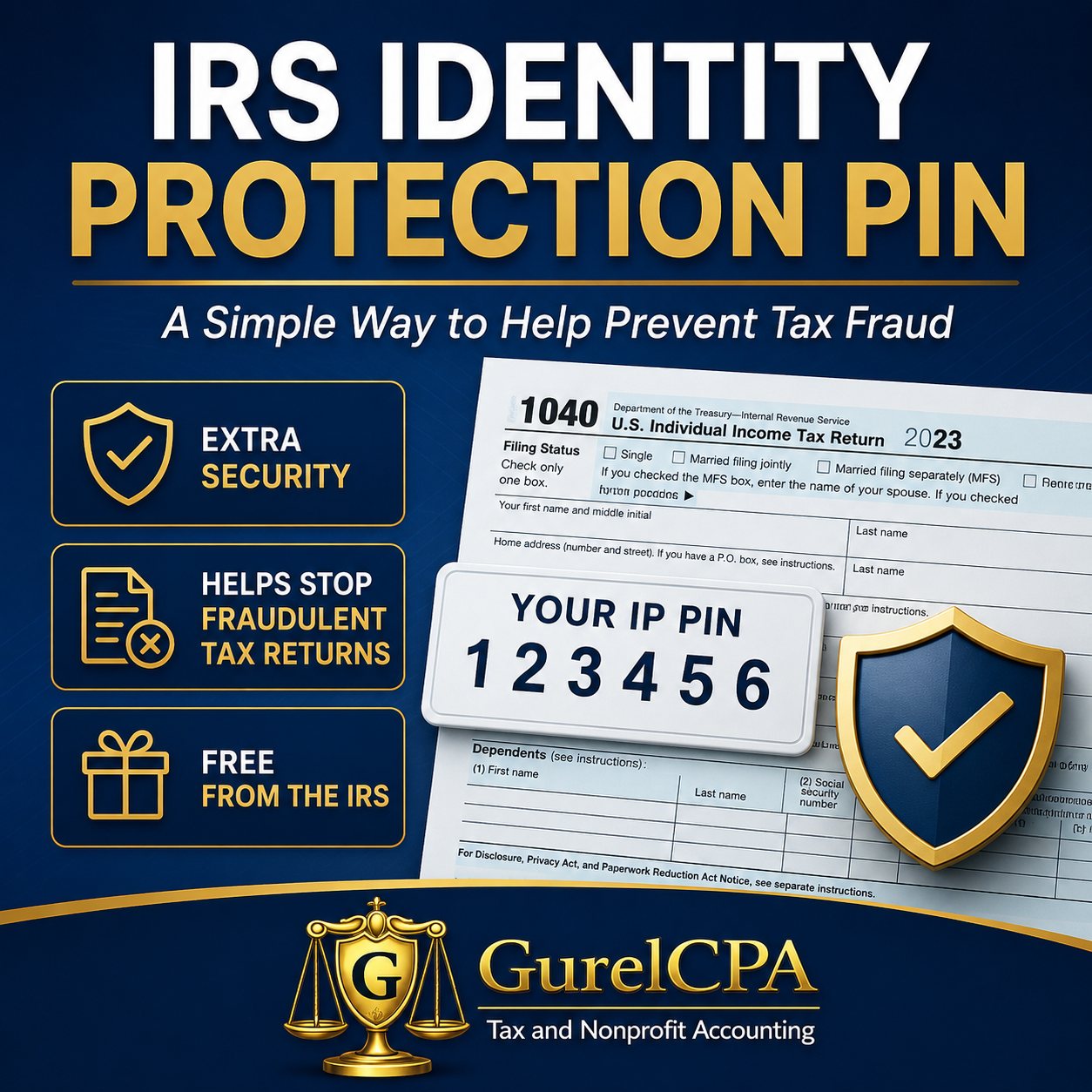
IRS Identity Protection PIN: A Simple Tool to Help Prevent Tax Fraud
Identity theft continues to be one of the most common tax-related problems facing taxpayers. Criminals often use stolen personal information to file fraudulent tax returns and claim refunds before the legitimate taxpayer has a chance to file.
One of the simplest ways to help protect yourself is by obtaining an IRS Identity Protection Personal Identification Number, commonly called an IP PIN.
What Is an IP PIN?
An IP PIN is a six-digit number issued by the IRS that helps verify your identity when you file your federal tax return. Once an IP PIN is assigned to your Social Security Number, the IRS generally will not process an electronically filed tax return without the correct PIN.
Why Does It Matter?
If someone obtains your Social Security Number, they may attempt to file a fraudulent tax return and claim a refund in your name. An IP PIN helps prevent this because the fraudster would also need your current year's PIN in order to successfully file.
Who Should Consider Getting One?
An IP PIN may be especially worth considering if you:
• Have been a victim of identity theft in the past
• Have had personal information exposed in a data breach
• Want an additional layer of protection for your tax return
• Are concerned about increasing online fraud and scams
Things to Know Before You Enroll
• A new IP PIN is issued each year.
• You must use the current year's PIN when filing.
• Keep it in a safe place.
• Losing your IP PIN can delay the filing process.
• The IP PIN applies to federal tax returns.
Is an IP PIN Right for You?
For many taxpayers, obtaining an IP PIN is a simple and effective way to add another layer of security to their tax filing process. While no system can eliminate fraud entirely, an IP PIN can make it significantly more difficult for criminals to file a fraudulent tax return using your information.
Need Help?
Questions about IRS identity theft protection, tax account security, or other IRS tools? Contact me directly for a free consultation.
The article is meant for informational purposes only. Please contact me directly to discuss how this applies to your individual tax situation.