Gift Tax: What Happens If the Donor Exceeds the Annual Gift Exclusion?
Gifts are not taxable to the recipient, but sometimes gifts are taxable to the donor.
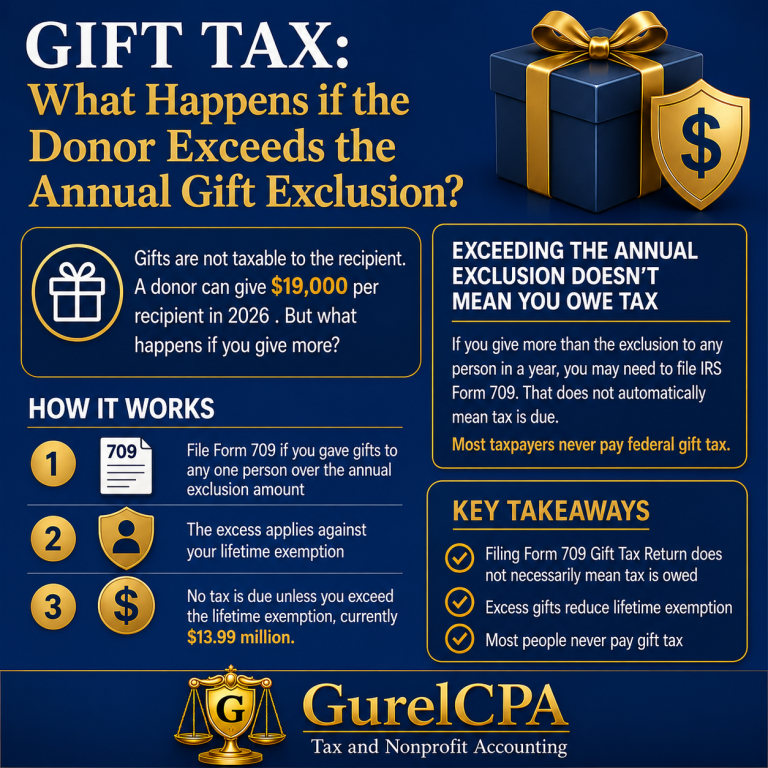
A donor can give gifts up to the annual exclusion amount (currently $19,000 per recipient for 2026) to as many people as they wish EACH YEAR. But what happens if you give more?
Exceeding the Annual Exclusion Doesn’t Mean You Owe Tax
If you give more than the exclusion to any person in a year, you may need to file IRS Form 709. That does not automatically mean tax is due. Most taxpayers never pay federal gift tax.
How It Works
1. File Form 709 if you gave gifts to any one person over the annual exclusion amount
2. The excess applies against your lifetime exemption
3. No tax is due unless you exceed the lifetime exemption, currently $13.99 million.
Example:
You give $50,000 to your daughter.
$32,000 exceeds the annual exclusion.
You file Form 709 to report the $32,000.
No tax is owed unless you someday exceed your lifetime exemption.
Future Income from Gifts
While gifts are not taxable to the recipient, future income from those gifts (interest, dividends, rent, etc.) is taxable to the recipient.
Key Takeaways:
• Filing Form 709 Gift Tax Return does not necessarily mean tax is owed
• Excess gifts reduce lifetime exemption
• Most people never pay gift tax
Please contact me for a free consultation to see how this information applies to your individual tax situation.