Why Separate Business and Personal Bank Accounts Matter
Many small business owners start out informally. A side gig grows into something bigger, money starts coming in, expenses start going out, and before long personal and business transactions are mixed together in the same checking account.
That may seem easier at first, but combining business and personal finances often creates major problems later.
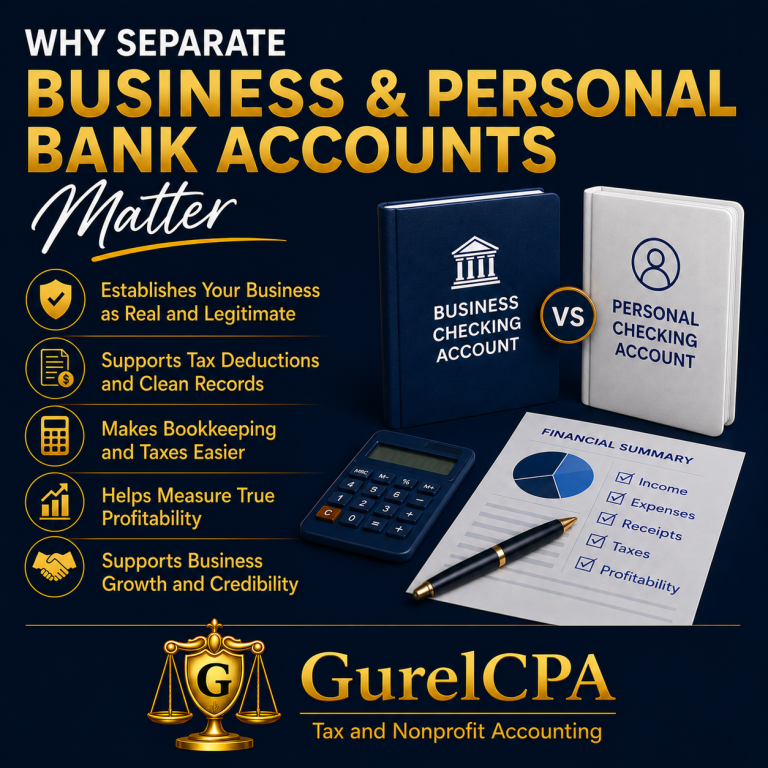
One of the simplest and most important steps a business owner can take is opening and consistently using a separate business checking account.
A Separate Account Helps Establish That the Business Is Real
When the IRS, a lender, or even a potential business partner reviews a business activity, one important question often exists in the background:
Is this a legitimate business activity or simply a personal hobby?
Using a dedicated business bank account helps demonstrate that the owner is operating in a businesslike manner.
Mixing Funds Creates Problems
When business and personal transactions are combined in one account, bookkeeping becomes far more difficult.
Common problems include:
- Missed deductions
- Poor financial records
- Difficulty preparing tax returns
- Increased accounting costs
- Problems proving expenses during an IRS examination
- Confusion over business profitability
- Difficulty obtaining financing
In many cases, business owners do not realize how much time and money they lose later trying to reconstruct records that could have been organized properly from the beginning.
Clean Records Help Support Tax Deductions
Good documentation matters.
A separate business checking account creates a cleaner paper trail for:
- Business income
- Vendor payments
- Advertising expenses
- Mileage reimbursements
- Equipment purchases
- Software subscriptions
- Home office related reimbursements through accountable plans
- Independent contractor payments
While a separate bank account alone does not automatically make an expense deductible, it often helps support the legitimacy and documentation of business activity.
LLC Protection and Corporate Formalities
For LLCs and corporations, separate banking is even more important.
Mixing personal and business funds may weaken the argument that the business is operating as a separate legal entity. Maintaining separate accounts helps support proper business formalities and demonstrates respect for the separate structure of the entity.
It Is Easier Than Many People Think
Opening a separate business checking account is often straightforward. Many banks offer low-cost or basic business checking options designed for small businesses and sole proprietors.
In many cases, the only things needed are:
- EIN or Social Security Number (depending on structure)
- Business formation documents if applicable
- Business license if required
- Personal identification
Even sole proprietors without an LLC can often open a separate business account using a DBA or their own legal name.
Final Thought
A separate business checking account is not just about organization. It helps establish credibility, improves bookkeeping, supports deductions, simplifies tax preparation, and helps demonstrate that a business is operating legitimately.
For many small businesses, it is one of the smartest foundational steps they can take early on.
This article is for general informational purposes only and should not be considered legal, tax, or accounting advice. Every business situation is different. If you would like assistance evaluating your business structure, recordkeeping, or tax compliance procedures, please contact GurelCPA for a free consultation.