Protecting Your Personal and Financial Information Online
Simple Steps to Reduce Your Risk of Identity Theft
Every year, millions of Americans have personal information exposed through data breaches, phishing scams, stolen devices, and fraudulent websites. Once criminals obtain enough information about you, they may attempt to open credit accounts, access financial records, file fraudulent tax returns, or steal money from existing accounts.
The good news is that a few simple habits can dramatically reduce your risk.
Use Strong Passwords and Multi-Factor Authentication
Your email account is often the key to everything else. If a criminal gains access to your email, they can reset passwords for banks, credit cards, and investment accounts.
Use unique passwords for important accounts and enable multi-factor authentication (MFA) whenever available.
Monitor Your Credit Reports
Federal law allows consumers to obtain free credit reports from each major credit bureau. Review them regularly for unfamiliar accounts, addresses, or inquiries.
Consider Freezing Your Credit
A credit freeze prevents new lenders from accessing your credit report without your authorization and is one of the strongest defenses against identity theft.
Be Suspicious of Unexpected Emails and Text Messages
Never click links in unexpected messages requesting personal information, passwords, or financial details. The IRS generally initiates contact by mail, not email or text.
Keep Your Devices Updated
Enable automatic updates on computers, phones, tablets, web browsers, and antivirus software whenever possible.
Secure Your Home Wi‑Fi Network
Change default router passwords and make sure your wireless network uses WPA2 or WPA3 security.
Limit What You Share Online
Birthdates, family relationships, schools attended, pets' names, and travel plans can all be useful to identity thieves.
Back Up Important Records
Maintain secure backups of important tax records, financial documents, photographs, and business files.
Protect Tax Documents
Store tax documents securely, avoid sending sensitive information through unsecured email, and use encrypted portals whenever possible.
Properly Dispose of Old Devices
Before selling, donating, or recycling computers, phones, or tablets, perform a factory reset and remove all personal data.
The Bottom Line
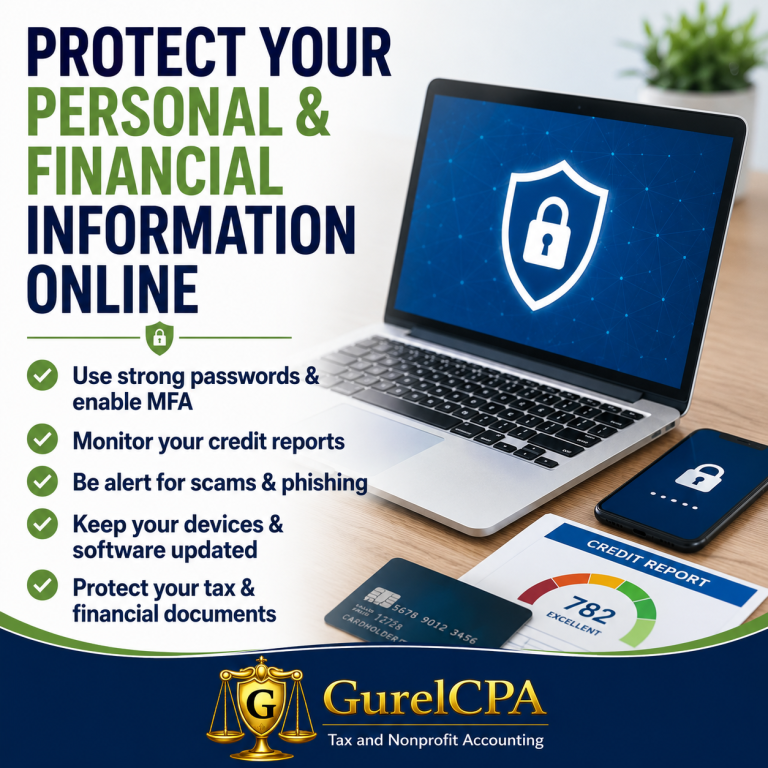
Most identity theft can be prevented through a few basic habits: use strong passwords, enable MFA, monitor your credit, stay alert for scams, and protect sensitive tax information.
Need Help Protecting Your Tax Information?
If you have concerns about IRS identity theft, suspicious tax notices, or protecting sensitive tax records, contact GurelCPA for a free consultation.
The article is meant for informational purposes only. Please contact me directly to discuss how this applies to your individual tax situation.