What Is an ITIN? Tax Rules, Refunds, and Credits for ITIN Holders
If you don’t have a Social Security Number but still need to file U.S. taxes, you may need an ITIN.
Here’s what ITIN holders need to know about filing requirements, tax refunds, and which credits are available (and not available).
What Is an ITIN?
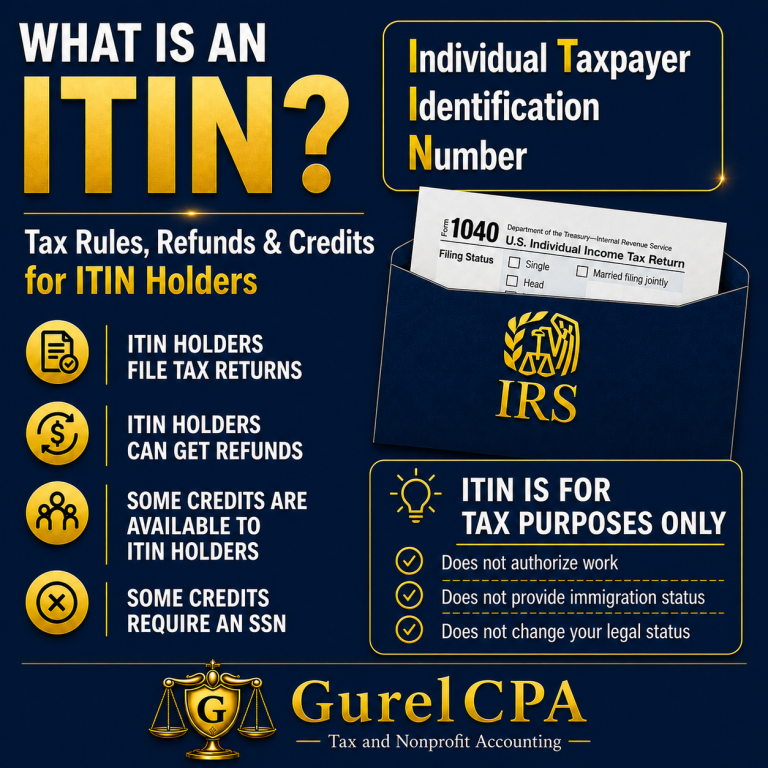
An Individual Taxpayer Identification Number (ITIN) is a tax processing number issued by the Internal Revenue Service.
It is used by individuals who:
- Are not eligible for a Social Security Number, and
- Still have a U.S. tax filing requirement
An ITIN is for tax purposes only. It does not authorize work and does not provide immigration status.
Who Needs an ITIN?
Common ITIN filers include:
- Nonresident aliens with U.S. income
- Resident aliens (for tax purposes) without work authorization
- Spouses or dependents of U.S. taxpayers
Do ITIN Holders Have to File Taxes?
Yes—if they meet IRS filing requirements.
ITIN holders may need to file:
- Form 1040 (resident taxpayers)
- Form 1040-NR (nonresidents)
If classified as a U.S. tax resident, they are taxed on worldwide income.
Can ITIN Holders Get a Tax Refund?
Yes.
ITIN holders can:
- File a tax return
- Reconcile taxes owed
- Receive a refund if too much tax was withheld
What Tax Credits Can ITIN Holders Claim?
Some credits are available—but many require a Social Security Number.
Credits ITIN Holders May Qualify For:
- Child Tax Credit (limited eligibility)
- Credit for Other Dependents
- American Opportunity Credit
What Credits Require a Social Security Number?
These major tax benefits are not available to ITIN-only taxpayers:
- Earned Income Tax Credit
- Refundable Child Tax Credit (in most cases)
- Recovery Rebate Credit (stimulus payments)
For the Child Tax Credit:
- The child must have a valid SSN
- The taxpayer may use an ITIN, but rules are limited
ITIN vs. Social Security Number
A Social Security Number (SSN) generally indicates:
- U.S. citizenship, or
- Authorization to work in the U.S.
An ITIN:
- Is only for tax reporting
- Does not authorize employment
- Does not change immigration status
Why Does the IRS Issue ITINs?
To ensure individuals with U.S. tax obligations can file returns and pay taxes, even without a Social Security Number.
Key Takeaways for ITIN Filers
- You can file a tax return with an ITIN
- You may be eligible for a refund
- Some tax credits are limited or unavailable
- Residency rules determine how you are taxed
If you have questions about ITIN filing, refunds, or credit eligibility, I offer a free consultation to review your situation and help you move forward with confidence.
This article is for general informational purposes only and does not constitute tax advice. ITIN filings often involve complex residency and eligibility rules.