How Long Should You Keep Tax Records?
One of the most common questions taxpayers ask is how long they need to keep their tax records. While it may be tempting to clean out old files, the IRS has specific record-retention guidelines that can protect you in the event of an audit, amended return, or future tax issue.
WHY KEEPING TAX RECORDS MATTERS
Tax records serve as proof of income, deductions, credits, and other items reported on your return. If the IRS questions a return or requests documentation, having complete records allows you to respond quickly and accurately.
Records are also important for:
• Filing amended returns
• Supporting carryforwards (capital losses, NOLs, credits)
• Establishing basis in property or investments
• Verifying income for loans, financial aid, or retirement planning
GENERAL IRS RECORD RETENTION RULES
The general rule is three years, but the length of time you should keep records depends on the situation. The IRS statute of limitations determines how long returns can be examined or amended.
Keep records for at least 3 years if:
• You filed a complete and accurate return
• You want the ability to file an amended return to claim a refund
Keep records for 6 years if:
• You omitted more than 25% of your gross income. That is how far back the IRS can question your tax return.
SPECIAL RECORD KEEPING SITUATIONS
Property and Investment Records:
Keep records relating to property, stocks, and other investments as long as you own the asset, plus at least 3 years after you sell or dispose of it.
Retirement Accounts:
Keep records showing contributions, rollovers, and conversions. These may be needed decades later when distributions begin.
PAPER VS. DIGITAL RECORDS
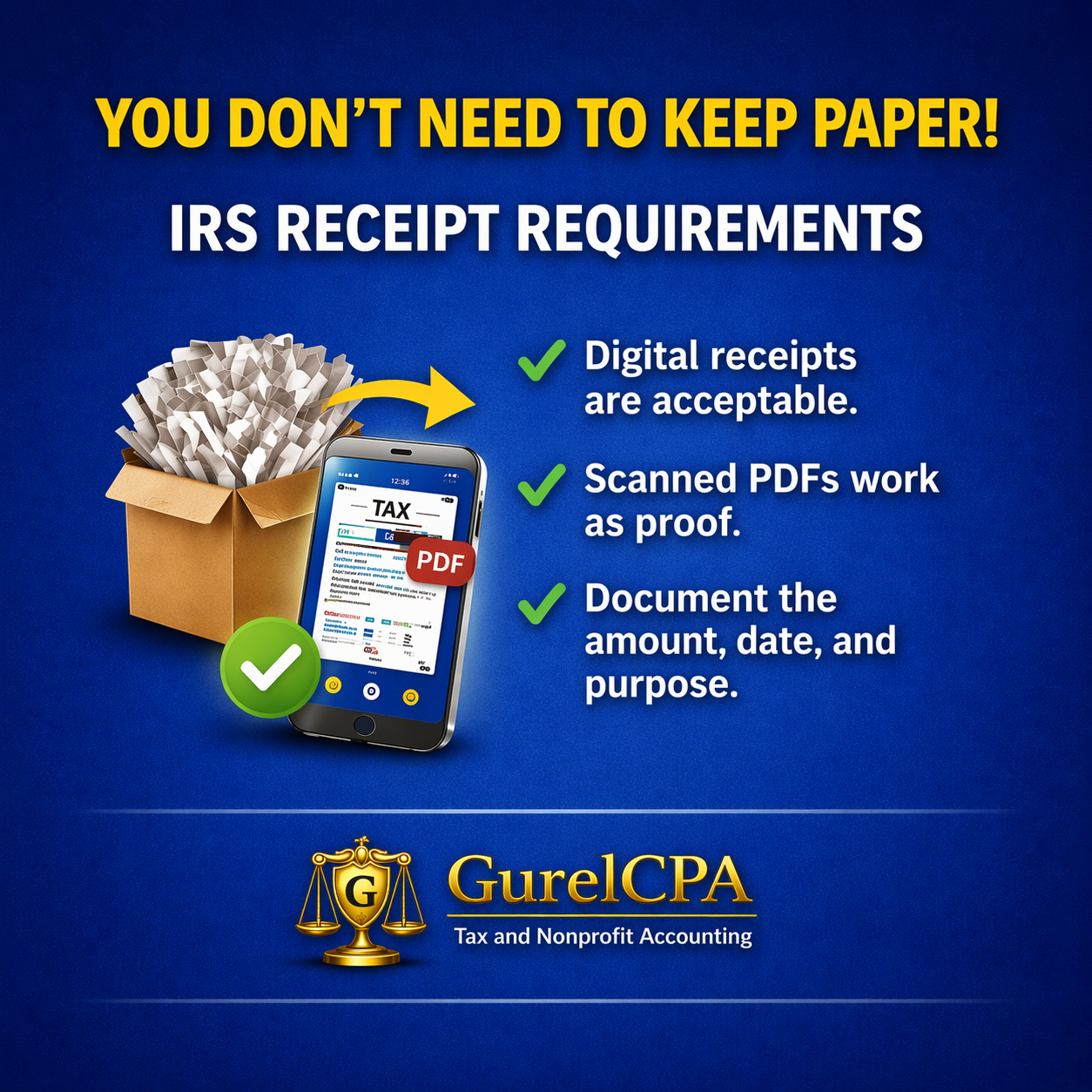
The IRS accepts digital copies of documents. Scanning and securely storing records electronically can reduce physical clutter, improve organization, and provide backup protection.
This article is for informational purposes only and does not constitute tax advice. Record-retention needs vary based on individual circumstances. Please contact me for a free consultation if you have questions about your individual tax situation.