No Tax on Tips and Overtime: Check Your W-2
You’ve probably heard the headlines: “No tax on tips” and “No tax on overtime.”
For 2025, this is real—and the most important thing to know is this:
👉 The information is already on your W-2.
What “No Tax” Actually Means
These are not full tax exemptions.
Instead, they are above-the-line deductions that reduce your federal taxable income:
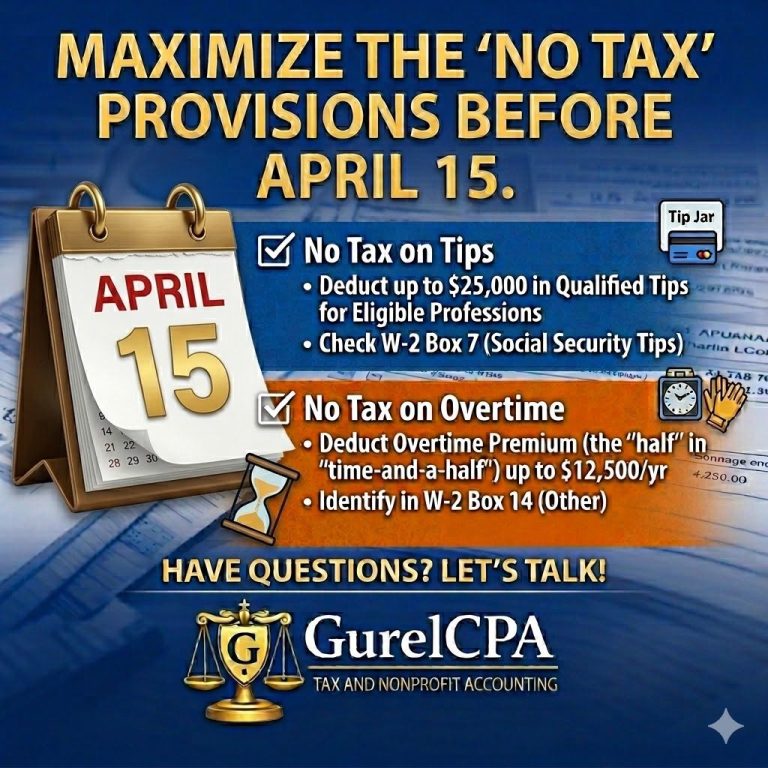
- Tips: Up to $25,000 may be deductible
- Overtime: The premium portion (the “half” in time-and-a-half) may be deductible
- Up to $12,500 (single)
- Up to $25,000 (married filing jointly)
⚠️ You still pay Social Security and Medicare (FICA) taxes on this income.
It’s Already on Your W-2
You don’t need to dig through paystubs—this is the big change.
Look at your W-2:
- Box 7 → Reported tips
- Box 14 → Often shows “Qualified Overtime” or “OT Premium”
- Box 12 → Some employers are starting to use new reporting codes
👉 Your employer has already done much of the tracking for you.
Why This Matters
Just because it’s on your W-2 doesn’t mean it’s handled correctly on your tax return.
We’re already seeing:
- unclear Box 14 descriptions
- missed overtime premium calculations
- deductions not fully applied
The Bottom Line
If you earned tips or overtime, your W-2 may unlock real tax savings—but only if it’s used correctly.
Questions? Let’s Talk
Please contact me directly to discuss how this applies to your individual tax situation. I offer a free consultation and would be happy to help you make sure you’re not leaving money on the table.
This article is provided for general informational purposes only and should not be considered tax advice. Each taxpayer’s situation is unique.