No Tax on Tips and Overtime: What Workers Need to Know
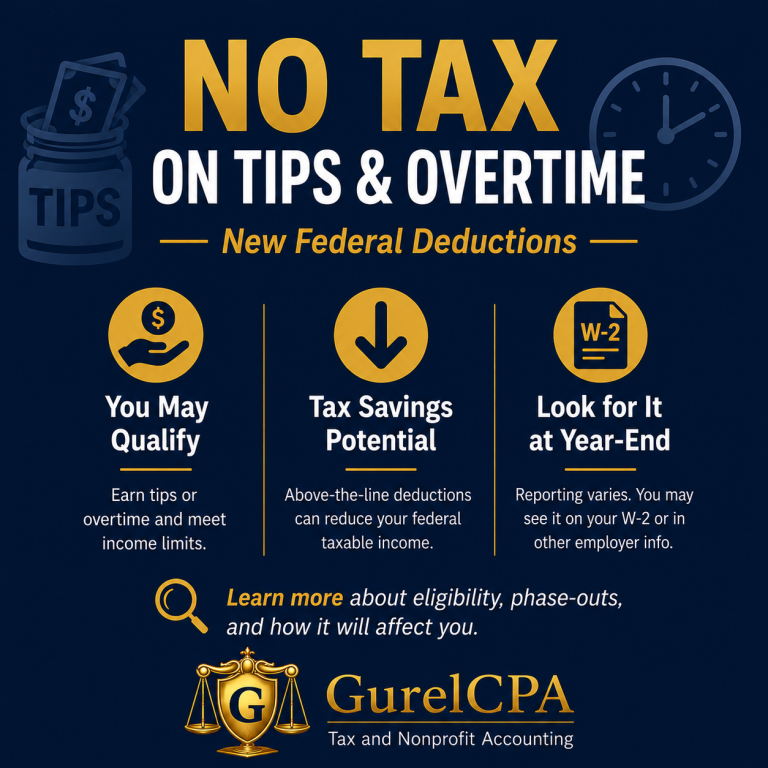
Millions of American workers may qualify for new federal tax deductions for tips and overtime beginning with the 2025 tax year.
Although these provisions are often called “No Tax on Tips” and “No Tax on Overtime,” the name is a little misleading. The income is still taxable, but eligible workers may be able to claim a deduction that reduces their federal taxable income when they file their tax return. These deductions are currently scheduled to apply for tax years 2025 through 2028.
Who May Qualify?
You may benefit if you receive:
- Qualified tips in an occupation that customarily and regularly receives tips.
- Qualified overtime compensation required under federal overtime rules.
- Income below the phase-out thresholds.
The deductions begin to phase out when modified adjusted gross income exceeds $150,000 for most individual filers and $300,000 for married couples filing jointly.
This Isn't a Tax-Free Paycheck
Many people expected these rules to eliminate taxes from each paycheck. That isn't how they work.
- Federal income tax may still be withheld.
- Social Security and Medicare (FICA) taxes still apply.
- State income taxes may still apply, depending on your state.
Instead, you'll generally claim the deduction when you file your federal tax return, which could reduce the tax you owe or increase your refund.
How Will It Show Up at Year-End?
For the 2025 tax year, employers were given transition relief. That means not every employer will report qualified tips or qualified overtime the same way. You may receive the information:
- On your Form W-2.
- In Box 14 of your W-2.
- On a separate employer statement.
- Through your employer's payroll portal.
Don't assume that if you don't see a special code on your W-2 you aren't eligible. Keep your year-end payroll information with your tax records.
What Should You Do Now?
- Save your year-end payroll documents.
- Review your W-2 carefully when it arrives.
- Make sure your tax preparer knows you received qualifying tips or overtime.
- Ask questions if your employer's reporting isn't clear.
The IRS continues to issue guidance, and reporting should become more standardized in future years.
The Bottom Line
These new deductions could reduce your federal income tax if you qualify, but they are not automatic paycheck exemptions and they don't eliminate payroll taxes.
The most important thing is making sure your year-end tax documents accurately reflect your qualifying tips or overtime so you receive every deduction you're entitled to.
Questions? Let’s Talk!
If you have questions about whether you qualify or how these new deductions apply to your situation, I'd be happy to help.
This article is provided for general informational purposes only and should not be considered tax advice. Each taxpayer’s situation is unique.