The September 15 Business Tax Deadline Is Almost Here
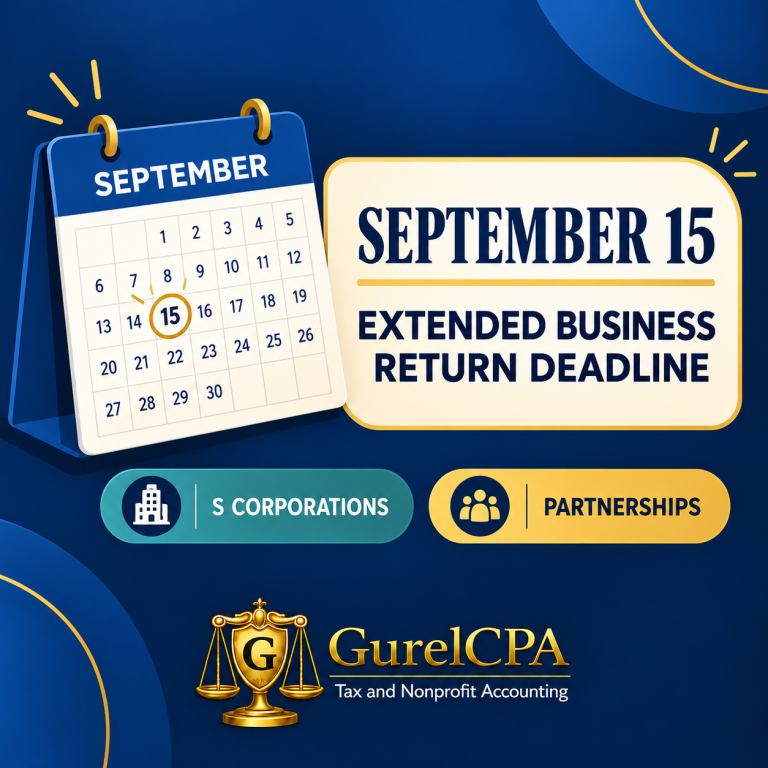
September 15, 2026, is an important filing date for many small businesses. Calendar-year S corporations and partnerships that received valid extensions must file their 2025 federal income tax returns by that date. With the deadline approaching, now is the time to resolve missing records and unfinished bookkeeping.
Who Must File by September 15?
The deadline applies to extended 2025 Form 1120-S returns for calendar-year S corporations and extended 2025 Form 1065 returns for calendar-year partnerships. Businesses operating on a fiscal year may have a different extended deadline based on the close of their tax year.
The entity must also provide each shareholder or partner with the appropriate Schedule K-1. The K-1 reports the owner's share of income, deductions, credits, and other items that may affect the owner's individual tax return.
Start With the Accounting Records
Before the return can be completed, the books should be current and reconciled. Common items still needed include bank and credit-card statements, payroll reports, asset purchases, loan activity, owner contributions and distributions, and explanations for unusual transactions. Waiting until deadline week can leave too little time to resolve discrepancies.
Why Timely K-1s Are Important
Shareholders and partners need their Schedule K-1 before completing their individual income tax returns. Individual taxpayers with valid extensions have until October 15, 2026, to file, but a delayed or incorrect K-1 can create a last-minute problem. Finishing the business return promptly gives owners more time to review their information and complete their personal returns.
An Extension Does Not Extend Payment Time
A filing extension allows more time to submit a return. It does not postpone tax that was due at the original deadline. S corporations and partnerships commonly pass income through to their owners, but the entity may still owe certain federal or state taxes. Penalties and interest may continue to accrue on unpaid balances.
What If the Return Is Filed Late?
Late-filing penalties for partnerships and S corporations can depend on both the number of owners and the length of the delay. As a result, the penalty can become substantial even when the entity owes little or no federal income tax. If the deadline cannot be met, filing as soon as possible is better than allowing the return to remain unfinished.
Take Action Before September 15
If your extended S corporation or partnership return is still in progress, contact me soon. We can identify the remaining information, review unresolved accounting issues, and determine what must be completed before filing.
The article is meant for informational purposes only. Please contact me directly to discuss how this applies to your individual tax situation.