Wildfire Tax Relief Applies Across Covered Washington Counties
Wildfires do not affect only the people whose homes or businesses are physically damaged. Smoke, road closures, evacuations, power interruptions, disrupted work, displaced family members, delayed mail, and the general strain placed on a community affect everyone who lives nearby.
The IRS has announced tax filing relief that reflects that reality. It is based on where a taxpayer lives or where a business is located, not on whether that taxpayer incurred an individual loss. For taxpayers located in a covered disaster area, the IRS automatically identifies the taxpayer by the address in its records and applies the available filing and payment relief.
Who Is Included?
The covered Washington counties are Chelan, Ferry, Okanogan, Spokane, Stevens, and Yakima. The relief also applies to residents and businesses within the Confederated Tribes and Bands of the Yakama Nation, the Confederated Tribes of the Colville Reservation, and the Spokane Tribe of Indians.
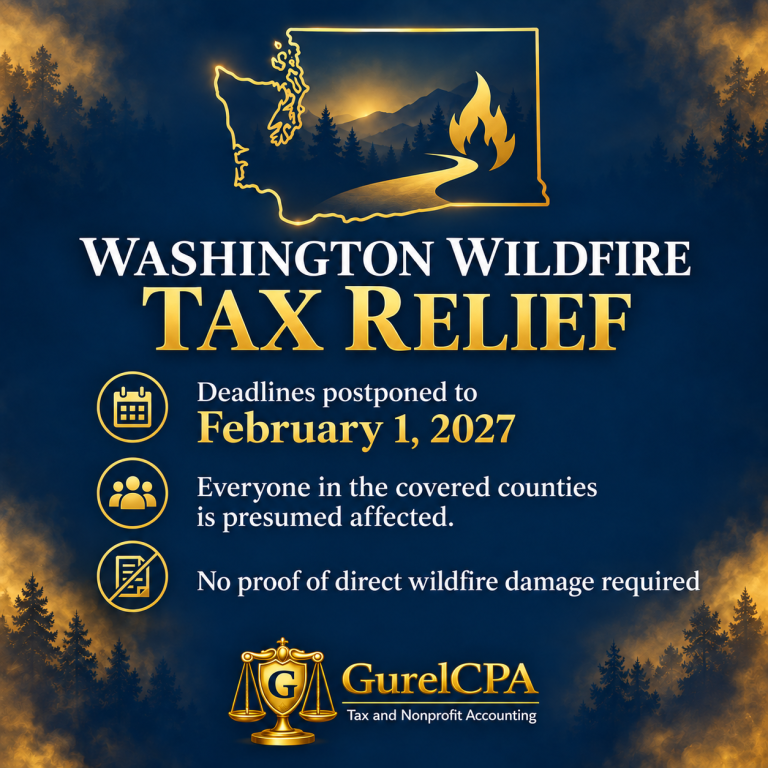
Individuals who live in these areas and businesses, including tax-exempt organizations, whose principal place of business is in these areas qualify. The practical message is simple: if your address places you in the covered area, you are presumed to be affected for this IRS relief. You do not have to submit photographs, evacuation records, insurance claims, or other evidence of direct wildfire damage to receive the automatic postponement.
Many Federal Tax Deadlines Move to February 1, 2027
The IRS has postponed many federal filing and payment deadlines that fell on or after July 31, 2026, and before February 1, 2027. Eligible individuals and businesses generally have until February 1, 2027, to complete the covered filing or payment obligation.
This includes many individual and business income tax returns, partnership and S corporation returns, trust and estate returns, annual information returns for tax-exempt organizations, certain payroll and excise tax returns, and estimated income tax payments originally due during the relief period.
An Important Limitation
The relief does not postpone every tax obligation. For example, taxpayers who received an extension to file a 2025 individual income tax return may now have until February 1, 2027, to file that return. However, any tax owed with the 2025 return was originally due April 15, 2026, before the disaster relief period began. That earlier payment deadline is not postponed by this announcement. Certain information returns and federal tax deposits also follow separate rules.
What Taxpayers Should Do
Taxpayers in the covered area do not need to contact the IRS or file a special request. The relief e applies automatically based on the taxpayer's address of record.
If an eligible taxpayer receives a late-filing or late-payment penalty notice for a covered deadline, the taxpayer should call the telephone number shown on the notice and ask the IRS to remove the penalty. A taxpayer located outside the covered area may also qualify when necessary records are located inside the disaster area, but that taxpayer may need to contact the IRS Special Services line at 866-562-5227.
The Larger Message
This relief is more than an extension of dates. It is recognition that a major wildfire disrupts an entire region. A person does not have to lose a home to be affected. A business does not have to burn to experience interruptions. The IRS has treated residents and businesses throughout the covered counties as affected taxpayers and has provided additional time accordingly.
The article is meant for informational purposes only. Please contact me directly to discuss how this applies to your individual tax situation.