Beneficial Ownership Information Reporting Is Officially Over for U.S. Companies
FinCEN has made permanent the exemption that removed most American small businesses from federal beneficial ownership reporting.
For millions of U.S. business owners, the federal Beneficial Ownership Information reporting requirement is no longer something they need to worry about.
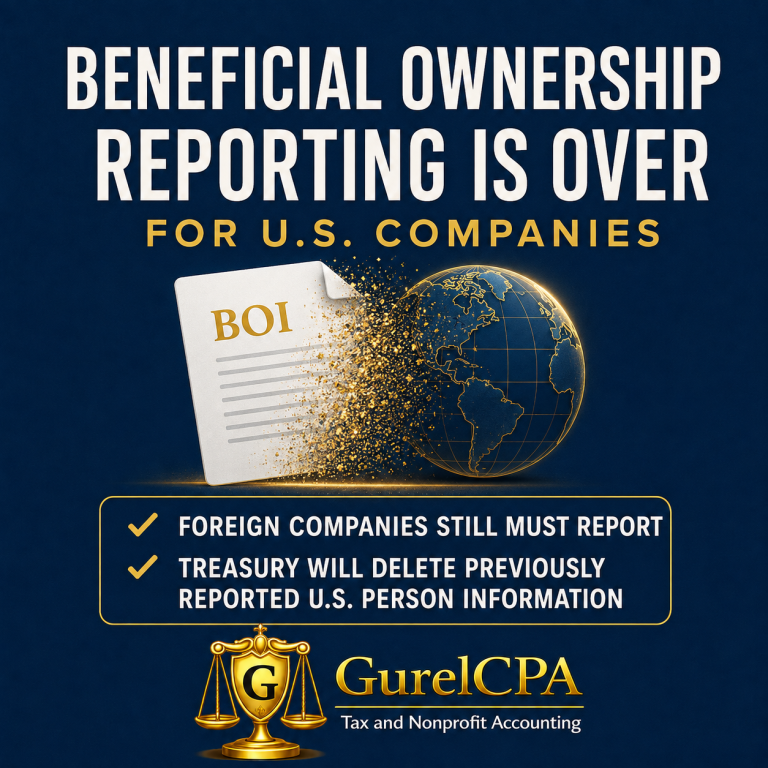
On August 11, 2026, the Financial Crimes Enforcement Network, commonly known as FinCEN, issued a final rule permanently exempting companies created in the United States and U.S. persons from BOI reporting under the Corporate Transparency Act. The rule makes permanent the relief that FinCEN first announced on an interim basis in March 2025.
What This Means for U.S. Businesses
A corporation, limited liability company, or other entity created under the laws of a U.S. state or Tribal jurisdiction does not have to file a BOI report with FinCEN.
U.S. persons who already obtained FinCEN identifiers are also no longer required to update or correct the personal information they submitted to obtain those identifiers.
What Happens to Information Already Submitted?
Many businesses and their owners filed BOI reports before the reporting requirements were suspended. FinCEN has announced that it will delete previously reported information about individuals it reasonably believes are U.S. persons, including information connected to a U.S. passport or driver’s license.
FinCEN says it will coordinate that deletion process with the National Archives and Records Administration to comply with federal records laws. Businesses do not need to submit a separate request for this deletion based on the guidance currently available.
Some Foreign Companies Must Still Report
The BOI reporting system has not been eliminated completely. Certain entities formed under the laws of a foreign country and registered to do business in a U.S. state or Tribal jurisdiction are still reporting companies.
Those foreign reporting companies must report information about their non-U.S. beneficial owners. They do not have to report U.S. beneficial owners or U.S. company applicants.
This distinction is important. A company created in Washington, Delaware, or another U.S. jurisdiction is exempt. A company created in another country and later registered to conduct business in the United States may still need to review the rules.
BOI Reporting Is Not the Same as Every FinCEN Filing
The final BOI rule does not cancel other federal reporting obligations administered by FinCEN. For example, it does not eliminate the requirement to file a Report of Foreign Bank and Financial Accounts, commonly called an FBAR, when the applicable requirements are met.
It also does not change ordinary federal or state tax filings, annual reports required by a secretary of state, business-license renewals, or a financial institution’s obligation to collect ownership information when opening or maintaining certain accounts.
The Bottom Line
For the typical U.S.-formed small business, BOI reporting is over. There is no initial report to file, no report to update, and no previously filed report to correct.
Businesses with a foreign organizational structure should not assume the same result. They should determine where the entity was legally formed and whether it registered to do business in the United States before deciding that no BOI filing is required.
The article is meant for informational purposes only. Please contact me directly to discuss how this applies to your individual tax situation.