Digital Assets and Your Tax Return: What the IRS Is Asking and Why It Matters
Digital assets, including cryptocurrency and similar technologies, are now firmly part of the federal tax landscape. Over the past several years, the IRS has expanded its reporting requirements related to digital assets, and taxpayers are now required to directly answer questions about their involvement with them when filing a federal tax return.
WHAT ARE DIGITAL ASSETS?
For tax purposes, the IRS uses the term digital assets to describe property that exists in digital form and uses cryptographic technology. Common examples include cryptocurrency such as Bitcoin or Ethereum, stablecoins, certain non-fungible tokens (NFTs), and other similar digital representations of value. Digital assets are generally treated as property, not currency, for federal tax purposes.
THE IRS DIGITAL ASSET QUESTION ON THE TAX RETURN
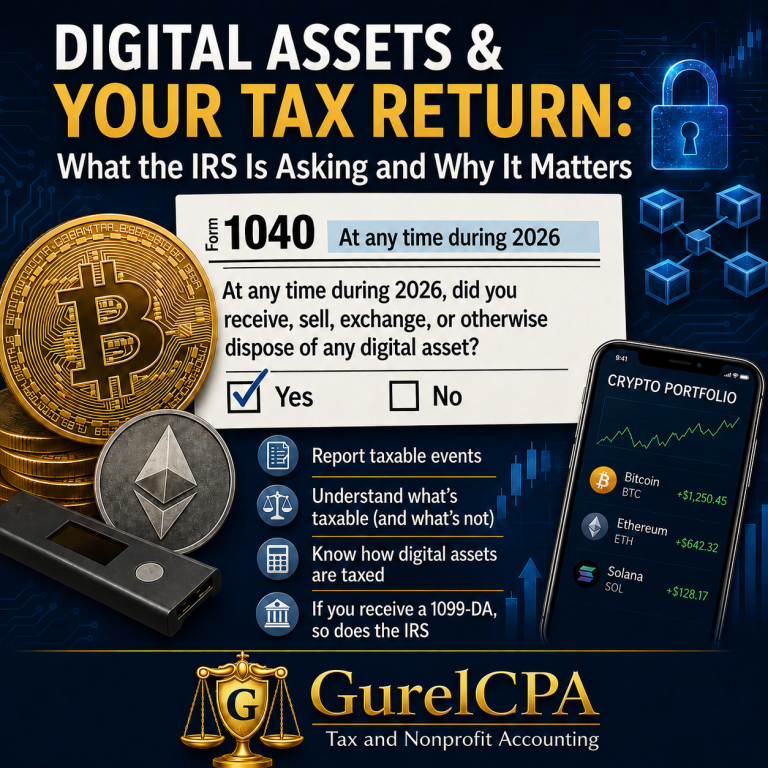
Every individual federal income tax return now includes a prominently worded question asking whether, at any time during the year, the taxpayer received, sold, exchanged, or otherwise disposed of any digital asset.
This question must be answered yes or no, and it applies even if the taxpayer had only limited activity.
WHEN DIGITAL ASSET ACTIVITY IS TAXABLE
Taxable events generally include selling digital assets for cash, exchanging one digital asset for another, using digital assets to purchase goods or services, and receiving digital assets as payment, compensation, or rewards.
WHEN DIGITAL ASSET ACTIVITY IS NOT TAXABLE
Some actions do not create a taxable event by themselves, including buying digital assets with cash and holding them, transferring digital assets between wallets you own, and holding digital assets without selling or exchanging them.
HOW DIGITAL ASSETS ARE TAXED
When a taxable transaction occurs, the tax treatment depends on how the digital asset was acquired and how long it was held. Capital gains or losses may apply when assets are sold or exchanged, while ordinary income may apply when assets are received as payment, mining rewards, or staking income.
NEW IRS REPORTING
Many cryptocurrency brokers and digital asset exchanges now issue Form 1099-DA to report certain digital asset transactions. If you receive a Form 1099-DA, the IRS generally receives the same information, making accurate reporting especially important.
FINAL THOUGHTS
Digital assets are no longer a niche issue in tax compliance. Even casual investors or individuals who received small amounts of cryptocurrency may have reporting obligations. Because digital asset taxation continues to evolve, if you bought, sold, exchanged, mined, staked, or received cryptocurrency during the year, be sure to discuss those transactions with your tax professional before filing your return.
The article is meant for informational purposes only. Please contact me directly to discuss how this applies to your individual tax situation.