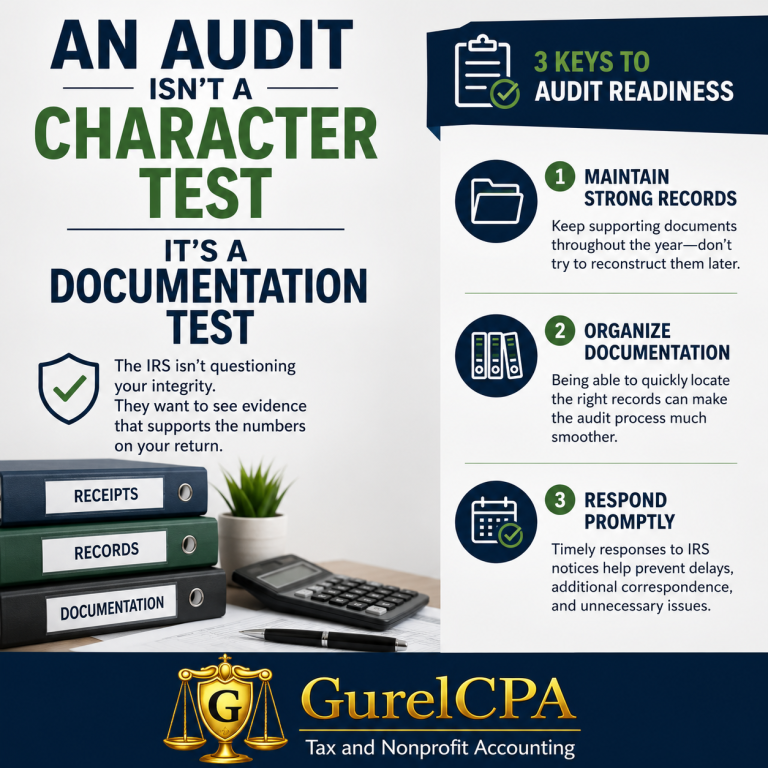
An Audit Isn’t a Character Test: It’s a Documentation Test
Many taxpayers hear the word “audit” and immediately feel anxious. They worry that an IRS audit means they have done something wrong or that their integrity is being questioned.
In reality, most audits are much less personal than people imagine.
An audit is usually not a test of your character. It is a test of your documentation.
The IRS Wants Evidence
When the IRS reviews a tax return, its primary question is simple:
Can you support the numbers reported on your return?
If you claimed business expenses, charitable contributions, mileage, home office deductions, or other tax benefits, the IRS may ask for documentation that supports those claims.
The IRS is generally looking for:
• Receipts and invoices
• Bank and credit card statements
• Mileage logs
• Payroll records
• Donation acknowledgments
• Accounting records
• Supporting schedules and workpapers
The stronger your records, the smoother the process tends to be.
Three Keys to Audit Readiness
1. Maintain Strong Records
Keep supporting documents throughout the year instead of trying to reconstruct them later.
2. Organize Documentation
Having documents is only part of the equation. The ability to quickly locate the correct records often determines how efficiently an audit proceeds.
3. Respond Promptly
IRS notices usually contain deadlines. Timely responses help prevent additional correspondence, delays, and unnecessary complications.
Good Records Reduce Stress
Many taxpayers assume that surviving an audit depends on arguing their case effectively.
More often, success comes down to being organized.
When records are readily available questions can be answered quickly, explanations become easier, and professional representation is more effective.
Good documentation turns uncertainty into confidence.
The Bottom Line
The best audit defense begins long before an IRS letter arrives.
Strong records, organized documentation, and timely responses can make the difference between a stressful experience and a manageable one.
Remember:
An audit isn't a character test. It's a paperwork test. And taxpayers who maintain good records are usually in the strongest position to succeed.
Need help responding to an IRS notice or preparing for an audit?
I help individuals, self-employed taxpayers, and small nonprofits organize records, respond to IRS inquiries, and navigate tax compliance issues with confidence.
This article is for informational purposes only and should not be considered tax or legal advice. Individual circumstances vary.