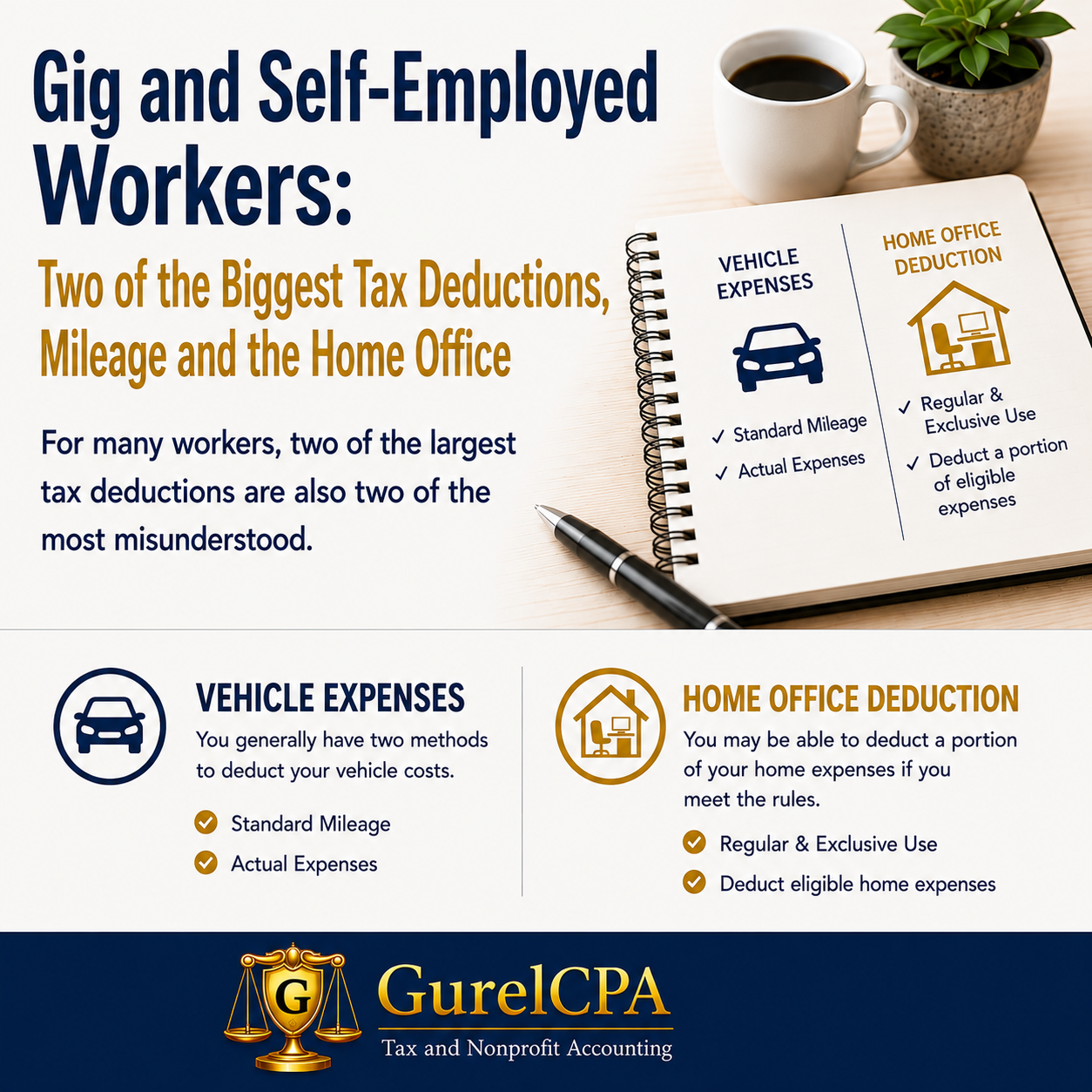
Gig & Self-Employed Workers:
Two of the Biggest Tax Deductions, Mileage and the Home Office
For many gig workers, two of the largest tax deductions are also two of the most misunderstood: vehicle expenses and the home office deduction.
Understanding these rules and keeping good records can make a significant difference in your tax bill.
Standard Mileage Rate vs. Actual Vehicle Expenses
If you use your vehicle for business, you may be able to deduct those costs. In most cases, you generally have two methods available.
Option 1: Standard Mileage Method
With this method, you track your business miles driven and multiply them by the IRS standard mileage rate for the year.
Benefits:
• Simpler and easier to manage
• Requires consistent mileage tracking
• Often works well for high-mileage drivers with lower operating costs
The key is maintaining a reliable mileage log showing:
• Date
• Business purpose
• Destination
• Miles driven
Option 2: Actual Expense Method
With this method, you track the actual cost of operating your vehicle, including:
• Gas
• Insurance
• Repairs and maintenance
• Registration and licensing
• Tires
• Depreciation or lease costs
You then deduct the business-use percentage of those expenses.
Benefits:
• May produce a larger deduction for expensive vehicles or vehicles with high operating costs
• Can be beneficial for lower-mileage drivers with substantial vehicle expenses
Drawbacks:
• Requires significantly more recordkeeping
• Requires separating personal and business use carefully
Which Vehicle Method Is Better?
It depends on your individual situation.
In general:
• High mileage + lower-cost vehicle → the mileage method often produces a strong deduction
• Higher-cost vehicle or high operating expenses → actual expenses may provide greater tax savings
One important issue many taxpayers do not realize:
Your choice during the first year a vehicle is used for business can affect which methods are available in future years. That makes it important to evaluate the options carefully from the beginning.
The Home Office Deduction
Many gig and self-employed workers also qualify for a home office deduction, but this area is frequently misunderstood.
The Key Rule: Regular and Exclusive Use
To qualify, part of your home must be used:
• Regularly for business
• Exclusively for business
That generally means a dedicated workspace used only for your business activities.
A spare bedroom converted into an office may qualify.
A kitchen table used for both personal and business activities generally does not.
What Expenses May Be Deductible?
If you qualify, you may be able to deduct a portion of:
• Rent or mortgage interest
• Utilities
• Internet
• Homeowners insurance
• Home maintenance and repairs
The deduction is generally based on the percentage of your home used for business.
Why These Deductions Matter
For many gig and self-employed workers, these are among the largest opportunities to reduce taxable income.
They are also areas where mistakes commonly occur:
• Not tracking mileage consistently
• Choosing the wrong vehicle deduction method
• Claiming a home office that does not meet IRS requirements
• Mixing personal and business expenses
Handled correctly, these deductions can substantially reduce taxes.
Handled poorly, they can create problems during an IRS review.
Good Records Matter
The IRS expects taxpayers to maintain documentation supporting deductions claimed on a tax return.
That typically includes:
• A mileage log
• Receipts and expense records
• Documentation supporting business use
• Clear separation between personal and business activities
Good recordkeeping is often what determines whether a deduction survives scrutiny.
Questions? Let’s Talk!
If you are unsure which vehicle deduction method makes the most sense — or whether your home office qualifies — it is worth getting guidance before filing.
Please contact me directly to discuss your individual situation. I offer a free consultation to help gig workers and self-employed taxpayers understand their options and avoid costly mistakes.
This article is for general informational purposes only and should not be considered tax or legal advice. Every tax situation is different. Contact GurelCPA for a free consultation.