10 Types of Income the IRS May Not Tax
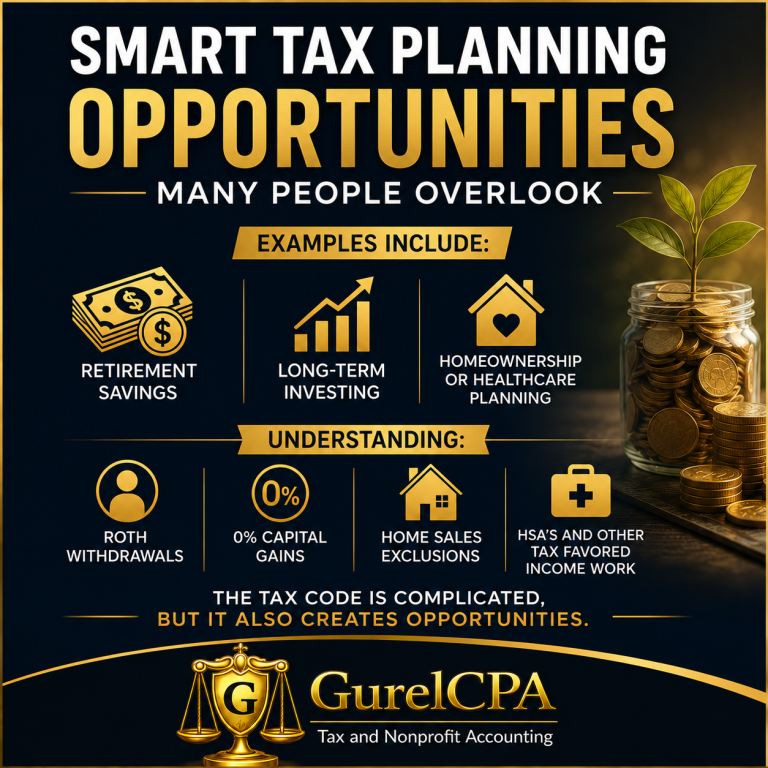
Smart Tax Planning Opportunities Many People Overlook
Most people assume the IRS taxes every dollar that comes in.
Not true.
The tax code includes several types of income that may be partially or completely free from federal income tax when the rules are followed correctly. Some are designed to encourage retirement savings. Others reward long-term investing, homeownership, or healthcare planning.
Here are 10 examples of income the IRS may not touch and why they matter.
1. Qualified Roth IRA Withdrawals
Qualified withdrawals from a Roth IRA are generally tax free because contributions were made with after-tax dollars.
If IRS holding period and age requirements are met, both the original contributions and the investment growth may come out tax free.
For many retirees, Roth accounts create valuable tax-free retirement income and flexibility.
2. 0% Long-Term Capital Gains
Not all investment gains are taxed at 15% or 20%.
Some taxpayers qualify for a 0% federal tax rate on long-term capital gains if their taxable income stays below certain thresholds.
This can create major planning opportunities for retirees and lower-income investors.
3. Gain From the Sale of Your Home
Many homeowners can exclude substantial profit from taxation when selling a primary residence.
Current rules generally allow exclusion of:
• Up to $250,000 for single filers
• Up to $500,000 for many married couples filing jointly
To qualify, taxpayers generally must have owned and lived in the home for at least two of the previous five years.
4. Municipal Bond Interest
Interest earned from many municipal bonds is exempt from federal income tax.
In some cases, it may also be exempt from state income tax.
Because of this favorable treatment, municipal bonds are often attractive to higher-income taxpayers seeking tax-efficient income.
5. Health Savings Account (HSA) Withdrawals
Qualified HSA withdrawals used for eligible medical expenses are generally tax free.
HSAs are especially powerful because they may offer:
• Tax-deductible contributions
• Tax-free growth
• Tax-free qualified withdrawals
Very few accounts receive this kind of triple tax advantage.
6. Life Insurance Death Benefits
Life insurance proceeds paid to beneficiaries are generally income-tax free.
While large estates can involve estate tax considerations, most beneficiaries do not owe federal income tax on life insurance death benefits they receive.
7. Gifts and Inheritances
Receiving a gift or inheritance usually does not create taxable income for the recipient.
There can be reporting requirements or future tax consequences depending on the asset involved, but inherited cash or property itself is often not taxable income.
8. Qualified Scholarships
Some scholarships are tax free when used for qualified education expenses such as:
• Tuition
• Required fees
• Required books and supplies
Amounts used for room and board generally do not qualify.
9. Some Social Security Benefits
Not all Social Security income is taxable.
Depending on total income levels, some retirees may pay tax on none, part, or up to 85% of their benefits.
For taxpayers with modest retirement income, a significant portion of Social Security may effectively be tax free.
10. Employer-Provided Health Insurance
Most employer-paid health insurance benefits are not treated as taxable income to employees.
This is one of the largest tax-free financial benefits many workers receive every year.
“Tax Free” Does Not Always Mean “No Tax Impact”
One important warning: tax-free income can still affect other parts of a tax return.
Some tax-advantaged income may:
• Increase Medicare premiums
• Affect taxation of Social Security
• Impact deductions or credits
• Change overall tax planning strategies
That is why good tax planning involves looking at the entire picture, not just one transaction.
Final Thoughts
The tax code is complicated, but it also creates opportunities.
Understanding how Roth withdrawals, 0% capital gains, home sale exclusions, HSAs, and other tax-favored income work may help taxpayers legally reduce taxes and improve long-term financial flexibility.
Strategic tax planning is often less about how much you make and more about how your income is structured.
This article is for general informational purposes only and should not be considered tax, legal, or financial advice. Tax laws are complex and frequently change. Every taxpayer’s situation is different. If you would like help evaluating tax-efficient income strategies or retirement planning opportunities, please contact GurelCPA for a free consultation.