Estimated Taxes: A Common Problem for Self-Employed and Overseas Taxpayers
Many taxpayers are surprised to learn that taxes generally must be paid throughout the year, not just when the tax return is filed. If too little tax is paid through withholding or estimated tax payments, the IRS may assess penalties even if a refund is later due.
Estimated taxes commonly apply to:
• Self-employment income
• Investment income
• Rental income
• Capital gains
• Partnership or S corporation income
• Retirement income with insufficient withholding
According to the IRS, individuals generally need to make estimated tax payments if they expect to owe at least $1,000 when their tax return is filed.
A Common Issue for Self-Employed Taxpayers
One of the most common tax problems we see is taxpayers having a strong year financially but failing to increase tax payments during the year.
This often happens with:
• Independent contractors and gig workers
• Small business owners
• Taxpayers selling investments
• Retirees taking larger IRA withdrawals
By tax season, the taxpayer may owe both a large balance due and IRS underpayment penalties.
This article is for general informational purposes only and does not constitute tax advice. Every situation is different
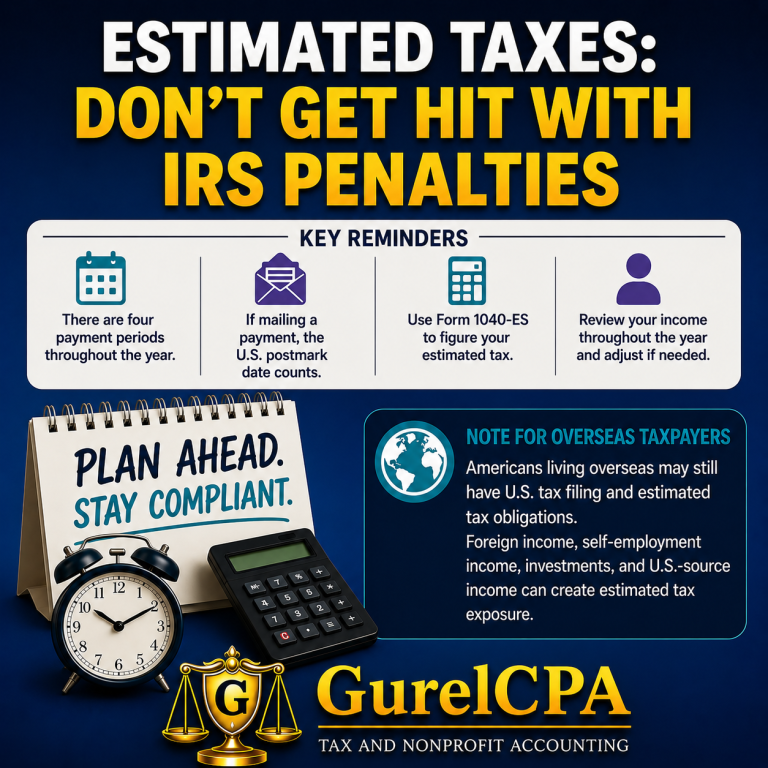
Overseas Taxpayers Often Face This Problem Too
Americans living overseas can run into estimated tax problems as well.
Many expats do not have enough U.S. tax withholding because they work for foreign employers, operate foreign businesses, or receive foreign income without withholding attached. Even taxpayers who qualify for the Foreign Earned Income Exclusion may still have filing requirements and, in some situations, estimated tax obligations.
Foreign investment income, rental income, self-employment income, and U.S.-source income can all create estimated tax exposure for Americans abroad.
Estimated Tax Penalties
Generally, many taxpayers can avoid penalties if they:
• Owe less than $1,000 after withholding and credits, OR
• Pay at least 90% of the current year tax liability, OR
• Pay 100% of the prior year tax liability (subject to certain higher-income rules)
Final Thoughts
Estimated taxes are one of the most overlooked areas of tax compliance, especially for self-employed individuals, retirees, investors, and Americans living overseas.
If your income changed significantly during the year, it may be worth reviewing your estimated tax situation before penalties accumulate.
This article is based in part on information published by the Internal Revenue Service regarding estimated taxes and underpayment penalties.
Questions about estimated taxes, quarterly payments, or overseas tax filing requirements?
I offer a free consultation to review your situation and determine the best course of action.