Minimum Wage Changes in 2026: What Employers Should Know
Minimum wage requirements continue to change across the country in 2026. The federal minimum wage remains $7.25 per hour, unchanged since 2009; but many states and local governments have adopted substantially higher rates. For employers, especially those with employees in more than one location, keeping track of the rate that applies to each worker is an important part of payroll compliance.
Minimum Wage Changes During 2026
Numerous states and local jurisdictions increased their minimum wage rates during 2026. Some increases took effect January 1, while others occur later in the year. Rates can also vary within a state because cities and counties may establish minimum wages that are higher than the statewide requirement.
Several states now have minimum wages above $15 per hour, while other states continue scheduled or inflation-based increases. Employers should not assume that the statewide rate is always the rate that applies.
Washington's 2026 Minimum Wage
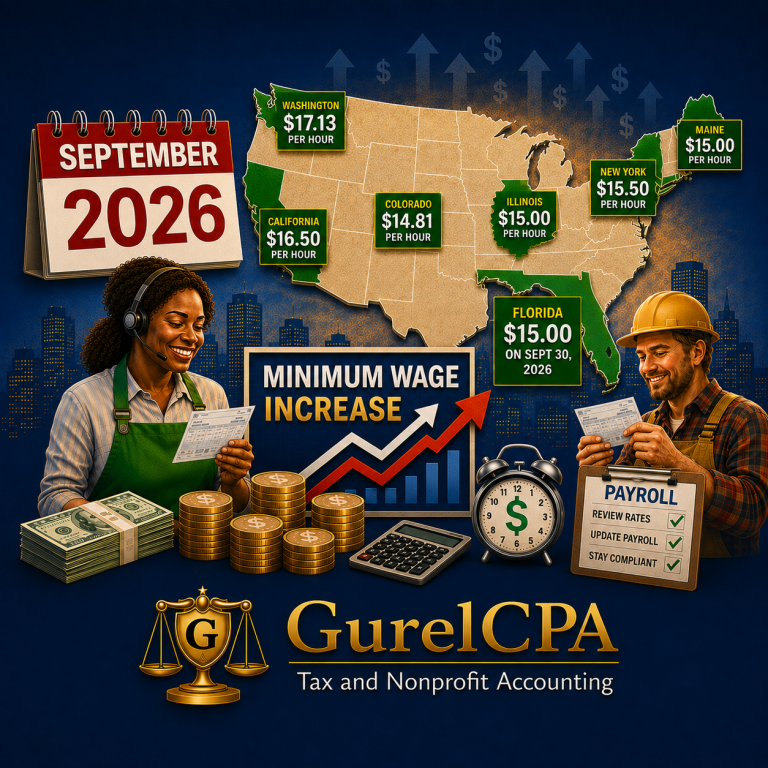
Washington's statewide minimum wage is $17.13 per hour for 2026, effective January 1, 2026. That is an increase from $16.66 per hour in 2025.
Washington employers also need to be aware of local minimum wage ordinances. Several jurisdictions have higher rates than the statewide minimum. For example, Seattle's 2026 minimum wage is $21.30 per hour, and Bellingham's is $19.13 per hour. Other Washington jurisdictions, including SeaTac, Tukwila, Renton, Everett, Burien, and unincorporated King County, also have local minimum wage requirements that may exceed the state rate.
Florida Reaches $15 in September
Another significant 2026 change is coming this month. Florida's minimum wage is currently $14.00 per hour and will increase to $15.00 per hour on September 30, 2026. The increase completes the phased increases approved by Florida voters in 2020. Beginning in 2027, Florida's minimum wage will again be adjusted annually for inflation.
Why This Matters for Employers
Minimum wage changes affect more than the hourly rate shown on a paycheck. They can affect payroll budgets, overtime calculations, salary thresholds tied to minimum wage laws, and other employment-related requirements. Employers with workers in different cities or states may have several different wage rules to monitor.
Employers should:
- Review the minimum wage currently being paid to each employee.
- Check whether a city, county, or other local minimum wage ordinance applies.
- Watch for increases that take effect during the year rather than on January 1.
- Update payroll systems and labor budgets when rates change.
- Review required workplace posters and notices when a new rate takes effect.
An Uneven Wage Landscape
The minimum wage landscape remains highly uneven across the United States. Some states continue to rely on the federal $7.25 minimum wage, while Washington and a number of other states have rates well above $15 per hour. Local wage ordinances can create even larger differences.
For small businesses, the practical lesson is simple: minimum wage compliance should be reviewed by employee location rather than by relying on a single national wage figure. Employers should confirm the current state and local requirements that apply wherever their employees work.
Looking Ahead
Minimum wage rates will continue to change. Washington, for example, makes an annual cost-of-living adjustment based on the Consumer Price Index for Urban Wage Earners and Clerical Workers (CPI-W), with the following year's rate announced each September. Employers should make wage-rate reviews part of their regular year-end payroll planning rather than waiting until a change creates a compliance problem.
The article is meant for informational purposes only. Please contact me directly to discuss how this applies to your individual tax situation.