Inherited an IRA? The IRS Is Enforcing These Required Minimum Distribution Rules
If you've been seeing articles about Required Minimum Distributions (RMDs) lately, you may be wondering whether the rules changed again.
For most retirees, the answer is no.
The age for starting RMDs remains 73 for individuals born between 1951 and 1959, and 75 for those born in 1960 or later. If you're already taking RMDs from your retirement accounts, there is probably nothing new to worry about.
The real story involves inherited IRAs.
The Surprise for Many IRA Beneficiaries
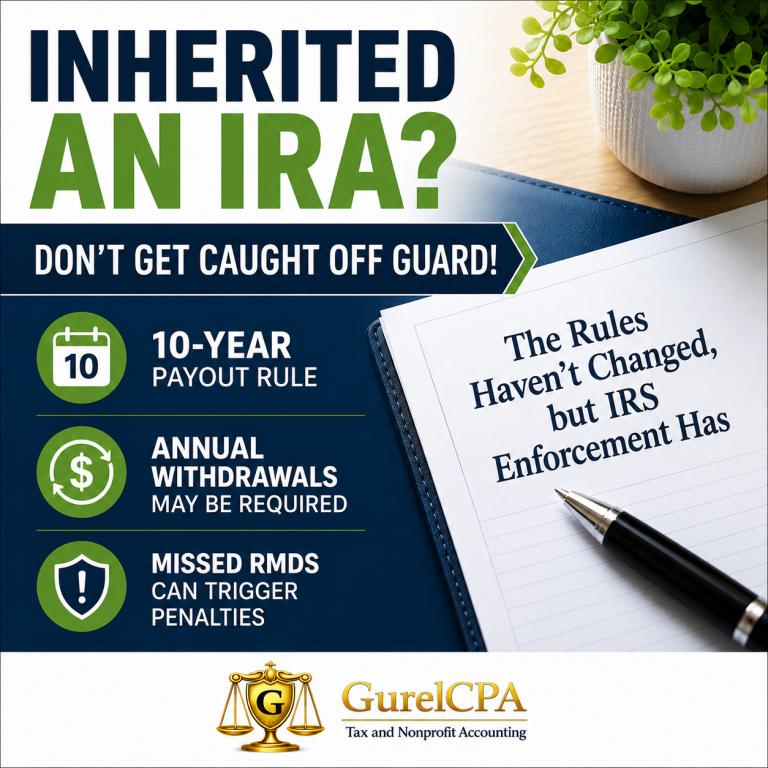
Under the SECURE Act, most non-spouse beneficiaries who inherit an IRA must withdraw the entire account within 10 years. For several years, however, the IRS delayed enforcement while it finalized the regulations.
Now those regulations are in place, and many beneficiaries are discovering that the 10-year rule may not work the way they expected.
If the original IRA owner had already begun taking RMDs before passing away, many beneficiaries must:
• Take annual distributions during years 1 through 9, and
• Completely empty the account by the end of year 10.
Many taxpayers believed they could simply wait until year ten and withdraw the entire balance. In many cases, that is no longer allowed.
Penalties Are Smaller, but Still Expensive
The SECURE 2.0 Act reduced the penalty for missed RMDs.
The old penalty was 50% of the amount that should have been withdrawn. Today, the penalty is generally 25%, and it may be reduced further if corrected quickly.
That's certainly better than before, but it can still be a costly mistake.
Why This Matters
Many inherited IRA beneficiaries have never taken a required distribution because the IRS repeatedly postponed enforcement of these rules.
Now that enforcement has begun, beneficiaries who miss required withdrawals could face penalties and unexpected tax issues.
There is also a planning opportunity. Taking distributions strategically over several years may help reduce the tax impact compared to waiting and taking large withdrawals later.
The Bottom Line
Most retirees don't need to worry about new RMD rules this year.
However, if you inherited an IRA after 2019, it may be time to take a closer look. The IRS is now enforcing inherited IRA distribution requirements that many beneficiaries have never had to follow before.
If you're unsure whether an inherited IRA requires an RMD this year, don't guess. A quick review now could prevent penalties and help you avoid unnecessary taxes later.
Questions about inherited IRAs, retirement distributions, or tax planning? Contact GurelCPA for a free consultation. We're happy to help you understand your options and stay compliant with the IRS.
This article is meant for informational purposes only and should not be relied upon as tax or legal advice. Please contact Lance W. Gurel, CPA directly to discuss your individual tax situation and inherited retirement account planning opportunities. Free consultations are available.