Non-Cash Charitable Contributions Require Receipts
Donating clothing, furniture, vehicles, artwork, or other property to charity can provide a valuable tax deduction, but only if you meet the IRS documentation requirements.
Missing paperwork is one of the most common reasons charitable deductions are denied.
Documentation Requirements
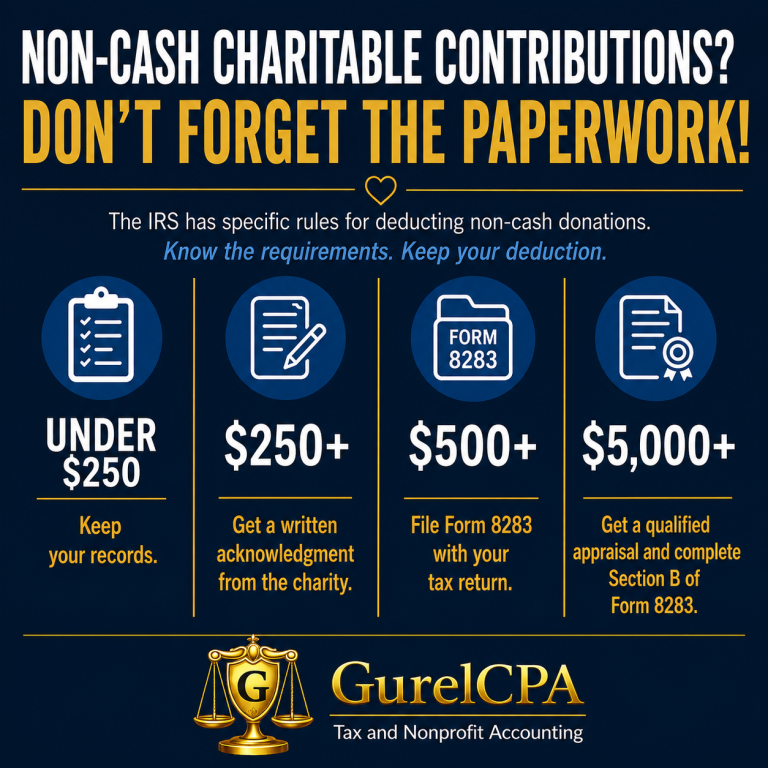
- Under $250: Keep a receipt or other written record showing the charity’s name, the date, and a description of the donated property.
- $250 or More: Obtain a contemporaneous written acknowledgment from the charity stating the property donated and whether you received any goods or services in return.
- Over $500: File Form 8283 (Section A) with your tax return.
- Over $5,000: Obtain a qualified appraisal, complete Section B of Form 8283, and have the appraiser and charity sign where required (exceptions apply, such as publicly traded securities).
A Few Practical Tips
- Donate only to qualified charitable organizations.
- Use fair market value, not original cost or replacement cost.
- Photograph valuable items and keep a detailed inventory.
- If a donation may exceed $5,000, talk with your CPA before making the gift.
The Bottom Line
The larger the non-cash contribution, the greater the IRS substantiation requirements. Taking a few extra steps before you donate can protect your deduction and prevent costly problems if your return is ever examined.
GurelCPA Tip:
If you're planning to donate high-value property such as artwork, vehicles, business equipment, or real estate, contact us before completing the gift. We'll help ensure you meet the IRS documentation requirements and preserve your deduction.
The article is meant for informational purposes only. Please contact me directly to discuss how this applies to your individual tax situation.