Friends and Family Can Help Fund an ABLE Account
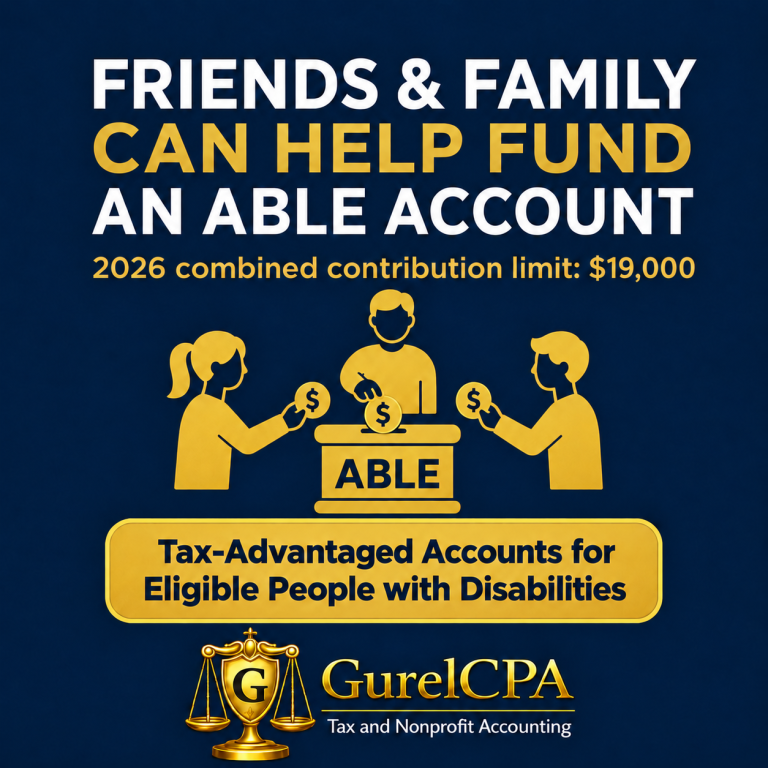
Achieving a Better Life Experience (ABLE) accounts allow eligible people with disabilities to save and invest money while receiving valuable tax benefits. One particularly useful feature is that the account does not have to be funded solely by the person with the disability.
Family members, friends, employers, and others may contribute to an eligible person's ABLE account.
How ABLE Accounts Work
An ABLE account is a tax-advantaged account established for an eligible person with a disability. Money in the account can grow without current federal income taxation. Withdrawals are generally tax-free when used for qualified disability expenses.
These expenses can include:
- Housing
- Education
- Transportation
- Healthcare and wellness
- Employment training and support
- Assistive technology
- Personal support services
- Financial management and legal expenses
The definition is intentionally broad. An expense generally qualifies when it relates to the beneficiary's disability and helps maintain or improve that person's health, independence, or quality of life.
Who Can Contribute?
The designated beneficiary may contribute to the account, but contributions can also come from:
- Parents and grandparents
- Other relatives
- Friends
- Employers
- Trusts or estates
- Other individuals or organizations
For example, a family member could contribute money to an ABLE account as a birthday or holiday gift. A community organization could also help fund the account.
Contributions generally must be made in cash or cash equivalents. A person contributing to someone else's ABLE account does not receive a federal charitable deduction because the contribution is a gift to that individual, not a donation to a charitable organization. Some states may offer their own tax benefits.
The Annual Contribution Limit Applies to Everyone Combined
For 2026, the regular annual ABLE contribution limit is generally $19,000.
That is the total limit for the account, not a separate limit for each contributor. If parents contribute $10,000, grandparents contribute $5,000, and friends contribute $4,000, the account has reached its regular $19,000 annual limit.
Certain employed beneficiaries may contribute an additional amount under the ABLE to Work rules. Eligibility for the additional contribution and the amount permitted depend on the beneficiary's compensation, workplace retirement-plan participation, and other factors.
The ABLE program and the beneficiary should monitor contributions carefully to prevent the combined total from exceeding the applicable limit.
Eligibility Expanded in 2026
Beginning in 2026, a person may qualify for an ABLE account if the qualifying disability or blindness began before age 46. The previous age-of-onset requirement was before age 26.
This change significantly expands the number of people who may qualify. The person does not need to be younger than 46 when the account is opened. What matters is whether the disability began before age 46 and the other eligibility requirements are satisfied.
ABLE Accounts and Public Benefits
ABLE accounts can be especially helpful for people receiving means-tested public benefits.
The Social Security Administration generally excludes up to $100,000 in an ABLE account when determining the beneficiary's resources for Supplemental Security Income (SSI). Different rules can apply once the account exceeds that amount.
Housing withdrawals and other transactions may require special attention. Beneficiaries receiving SSI, Medicaid, or other public benefits should coordinate ABLE account activity with the applicable program rules.
A Practical Way for Others to Help
An ABLE account gives friends and family a structured way to provide financial assistance without simply placing money into the beneficiary's regular bank account. It can help the beneficiary save for current expenses, emergencies, assistive technology, education, transportation, housing, and other disability-related needs.
Before contributing, donors should coordinate with the beneficiary or account administrator. This helps ensure that the annual limit has not already been reached and that the contribution is deposited correctly.
ABLE account rules involve both federal tax law and public-benefit considerations. Careful planning can help the beneficiary receive the intended assistance without creating unnecessary tax or benefit problems.
The article is meant for informational purposes only. Please contact me directly to discuss how this applies to your individual tax situation.