Should a Sole Proprietor Get an EIN?
Many people start a business as a sole proprietor and simply use their Social Security number (SSN) for tax purposes. In many cases, that's perfectly acceptable.
However, just because you can use your Social Security number doesn't necessarily mean you should.
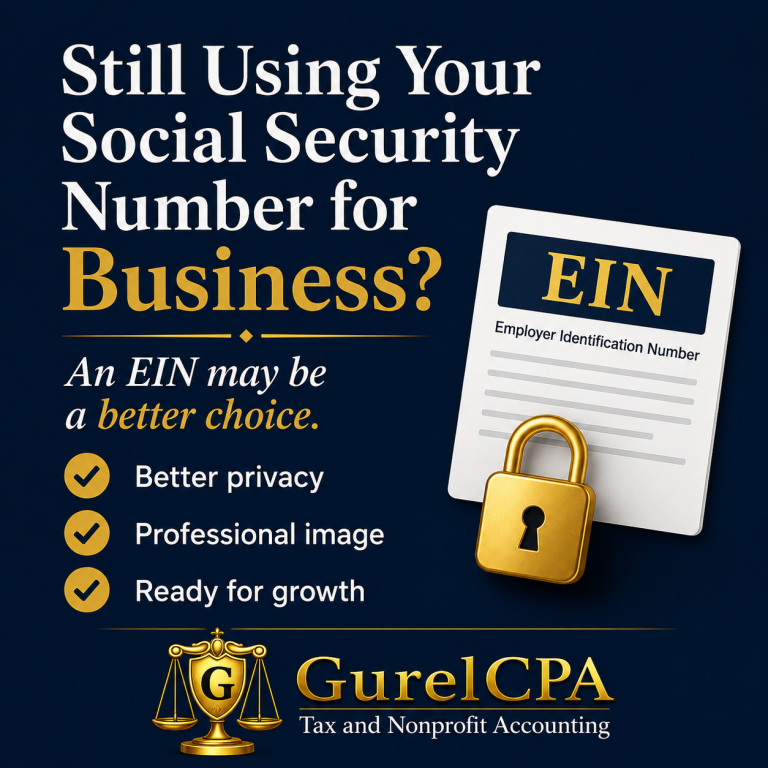
For many sole proprietors, obtaining an Employer Identification Number (EIN) is a simple step that can provide practical benefits, even if they never hire an employee.
What Is an EIN?
An Employer Identification Number is a unique number issued by the IRS to identify a business. You can think of it as the business equivalent of a Social Security number.
Despite its name, you do not have to be an employer to obtain an EIN.
The IRS issues EINs free of charge, and many sole proprietors qualify for one.
Why Consider an EIN?
Protect Your Social Security Number
One of the biggest advantages is privacy.
If you use your Social Security number for invoices, Forms W-9, or information provided to customers, you will end up sharing your personal identification number with numerous businesses.
An EIN allows many business documents to use the business identification number instead of your Social Security number, reducing unnecessary exposure.
Open a Business Bank Account
Many banks require or strongly prefer an EIN when opening a business checking account.
Keeping your business and personal finances separate makes bookkeeping easier and helps create a more professional image.
Build Business Credibility
Customers, vendors, and financial institutions often expect a business to have its own tax identification number.
Using an EIN can make your business appear more established and organized.
Prepare for Future Growth
You may not have employees today, but your business could grow.
Obtaining an EIN now means you're already prepared if you later hire employees, form an LLC, or make other business changes.
When Is an EIN Required?
While many sole proprietors may choose to obtain an EIN voluntarily, the IRS requires one in certain situations, including if you:
- Hire employees
- Establish certain retirement plans
- File certain federal tax returns
- Operate specific types of businesses
If you are unsure whether your business requires an EIN, it's a good idea to ask your tax advisor.
Does an EIN Change How You're Taxed?
No.
Obtaining an EIN does not change your business structure or how your income is taxed.
A sole proprietor with an EIN continues to report business income and expenses on Schedule C of Form 1040, just as before.
An EIN is simply another taxpayer identification number for the business.
The Bottom Line
Obtaining an EIN is free, quick, and provides important privacy and administrative benefits for sole proprietors.
If you're starting a new business or wondering whether an EIN makes sense for your situation, a conversation with your CPA can help you make the right decision.
This article is for informational purposes only and does not constitute tax advice. Every taxpayer’s situation is unique. Please contact GurelCPA directly for personalized guidance and to discuss your specific circumstances.