Working Remotely From Another State?
You May Owe More State Income Tax Than You Think
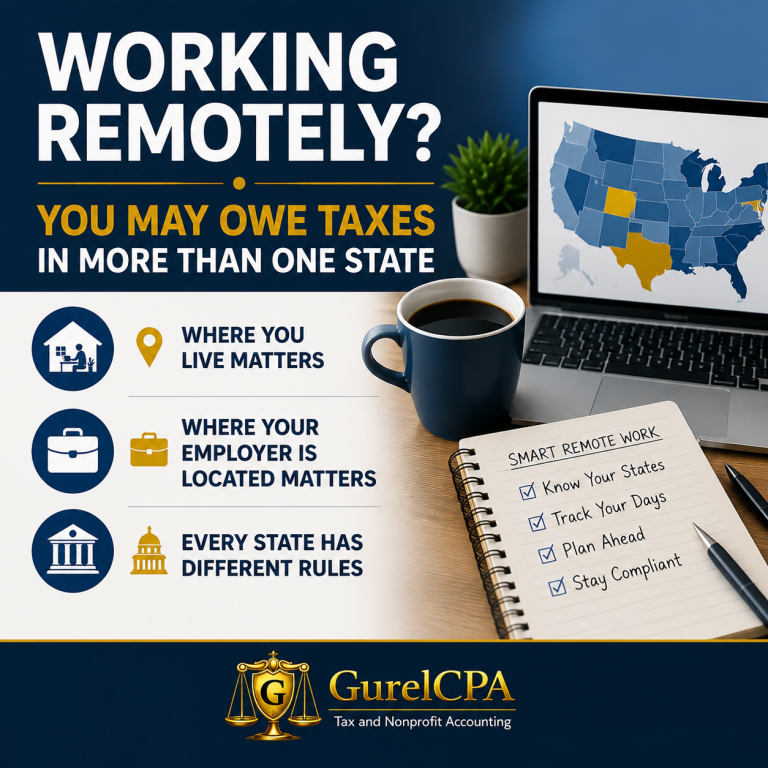
Remote work has given employees the freedom to live almost anywhere, but it has also created unexpected state tax problems. Many remote workers assume they only owe income tax where they live. Unfortunately, that is not always true.
Several states have become much more aggressive in auditing remote employees, particularly those who work for employers located in another state. One of the biggest examples is New York's long-standing 'Convenience of the Employer' rule, which has repeatedly been upheld by the courts.
What Is the "Convenience of the Employer" Rule?
If you work for a New York employer but perform your job from another state for your own convenience rather than because your employer requires it, New York may still treat those workdays as New York workdays.
That means you could owe New York income tax even if you rarely set foot in the state.
Example:
- You live in Florida.
- Your employer's office is in New York.
- You work from your Florida home by choice.
- New York may still tax some or all of your wages.
Other States Are Paying Attention
New York is not alone. Several states are increasing enforcement efforts involving remote workers, residency, payroll withholding, and state tax nexus. States are sharing information more frequently and using payroll records to identify taxpayers who may owe additional taxes.
If you worked remotely in more than one state during the year, you may need:
- Multiple state tax returns
- Credits for taxes paid to another state
- Adjustments to payroll withholding
- Careful documentation of where you actually worked
It Can Affect Employers Too
Businesses with remote employees may also create tax obligations simply by allowing an employee to work from another state.
- State payroll withholding requirements
- Business registration requirements
- State unemployment insurance obligations
- Income or franchise tax filing requirements
- Sales tax nexus in some situations
Keep Good Records
If you regularly work from multiple locations, keep records of:
- Your primary work location
- Days worked in each state
- Employer policies regarding remote work
- Travel calendars
- Payroll records
The Bottom Line
Remote work has made life more flexible, but state tax rules have not kept pace. Working from home—or from another state—can create unexpected filing requirements for both employees and employers.
If you work remotely across state lines or have employees working from multiple states, it is worth reviewing your situation before tax season rather than after receiving a notice.
Question? Let’s Talk!
Multi-state tax rules? Contact GurelCPA. We can help determine where you need to file, whether you're eligible for credits, and how to avoid costly surprises.
The article is meant for informational purposes only. Please contact me directly to discuss how this applies to your individual tax situation.