What Are Capital Gains?
When you sell something for more than you paid for it, you create a capital gain. Capital gains occur when you sell certain types of property, and understanding how they are taxed can help you make better financial decisions.
What Is a Capital Gain?
A capital gain is the gain you make when you sell a capital asset for more than its tax basis (usually what you paid for it, plus certain expenditures).
Short-Term vs. Long-Term Capital Gains
Short-term capital gains apply when you own an asset for one year or less before selling it and are taxed at ordinary income tax rates. Long-term capital gains apply when you own an asset for more than one year and qualify for lower tax rates. Holding an investment long enough to qualify as long-term treatment can significantly reduce the taxes owed.
Long-Term Capital Gains Have Favorable Tax Rates
For 2026, long-term capital gains are taxed at 0%, 15%, or 20%, depending on taxable income.
0% rate:
• Single: Up to $49,450
• Married Filing Jointly: Up to $98,900
15% rate:
• Single: $49,451 to $545,500
• Married Filing Jointly: $98,901 to $613,700
With a little planning, it is possible to spread gains over multiple tax years to keep more gains in the 0% bracket or avoid moving into the 20% bracket.
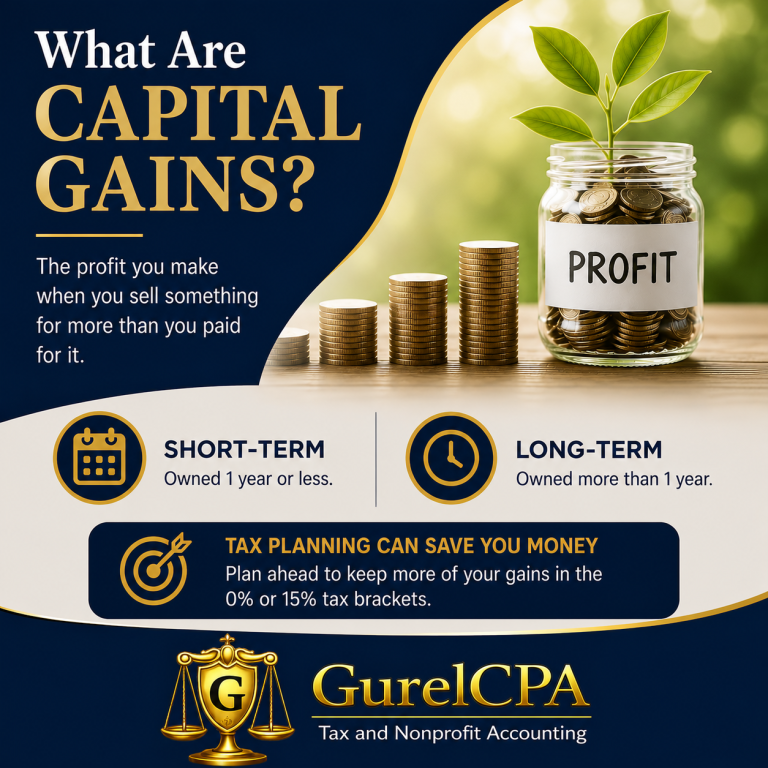
Tax Planning Can Reduce Capital Gains Tax
Before selling appreciated investments, real estate, or other assets, consider whether the asset has been held long enough for long-term treatment, whether the sale should occur in a lower-income year, whether multiple sales can be spread over multiple years, and whether capital losses are available to offset gains.
We're Here to Help
If you're planning to sell investments, real estate, or other appreciated assets, contact us before completing the transaction. We can help identify opportunities to minimize your capital gains tax through careful planning.
The article is meant for informational purposes only. Please contact me directly to discuss how this applies to your individual tax situation.