IRS Makes Penalty Relief Automatic for Many Taxpayers
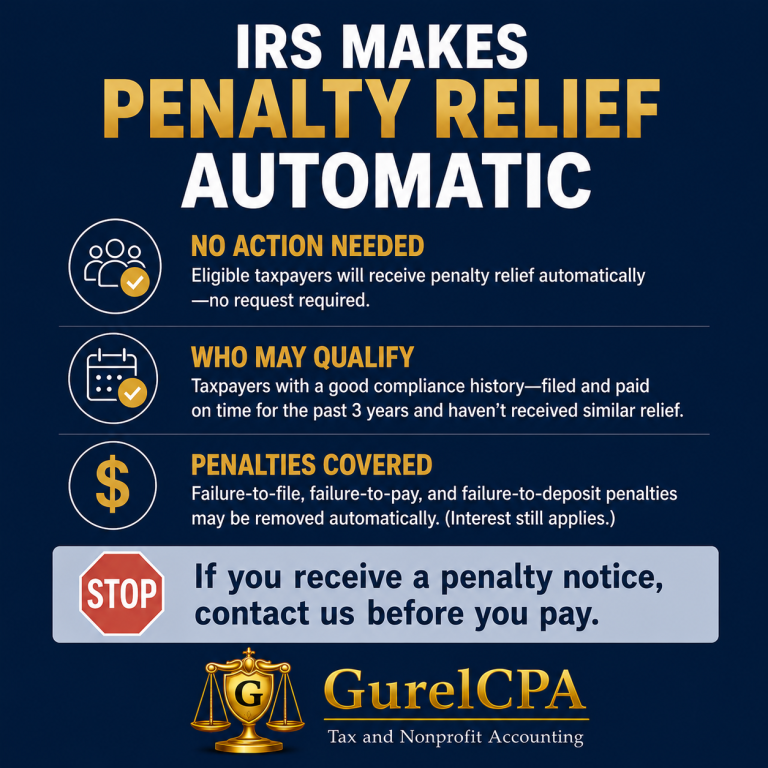
The IRS has announced a significant taxpayer-friendly change that will make it easier for eligible individuals and businesses to avoid certain IRS penalties. Instead of requiring taxpayers to request relief, the IRS will begin granting qualifying penalty relief automatically to taxpayers with a strong history of compliance.
What's Changing?
For many years, taxpayers who qualified for First Time Abate (FTA) penalty relief had to know the program existed and contact the IRS to request it. Many eligible taxpayers never received this relief simply because they didn't know to ask.
The IRS is replacing that process with a new system called Automatic Exemption from Penalty (AEP).
Under AEP, the IRS will determine eligibility during return processing and automatically remove qualifying penalties without requiring taxpayers to file a request or make a phone call.
Who May Qualify?
- Filing required tax returns on time for the previous three years.
- Paying tax due on time (or making appropriate payment arrangements).
- Not having received similar administrative penalty relief during the look-back period.
Which Penalties Are Covered?
- Failure-to-File penalties
- Failure-to-Pay penalties
- Failure-to-Deposit penalties (primarily for businesses)
Interest on unpaid taxes still applies, and taxpayers remain responsible for paying any tax owed.
When Does It Begin?
The IRS is beginning the transition during the summer of 2026.
• 2025 tax year returns and 2026 quarterly business returns are part of the transition period. Some eligible taxpayers may still receive penalty notices during this phase. If that happens, qualifying taxpayers can still request First Time Abate under the existing rules.
• For returns with original due dates on or after January 1, 2027, AEP is expected to replace First Time Abate for eligible taxpayers, making the relief automatic.
If You Don't Qualify
Taxpayers who don't meet the requirements for AEP may still request penalty relief based on reasonable cause, such as serious illness, natural disasters, or other circumstances beyond their control. The IRS will continue reviewing those requests individually.
Why This Matters
This change removes one of the biggest frustrations in the penalty relief process. Previously, taxpayers often needed to know about the First Time Abate program or hire a tax professional to request it. Under the new system, many eligible taxpayers will receive the relief automatically, reducing paperwork, phone calls, and unnecessary penalties.
Need Help?
If you've received an IRS penalty notice, don't assume you must pay it. You may qualify for automatic relief or another form of penalty abatement. Before paying an IRS penalty, it's worth having the notice reviewed to determine whether relief is available.
The article is meant for informational purposes only. Please contact me directly to discuss how this applies to your individual tax situation.