Where’s My Refund?
Every filing season, one question dominates online searches:
“Where’s my refund?”
If you’re expecting a refund, it’s completely normal to check the status.
And understanding what the IRS tool is actually telling you can help reduce anxiety and avoid unnecessary panic.
How the IRS Refund Tracker Works
The IRS “Where’s My Refund?” tool updates once per day, typically overnight.
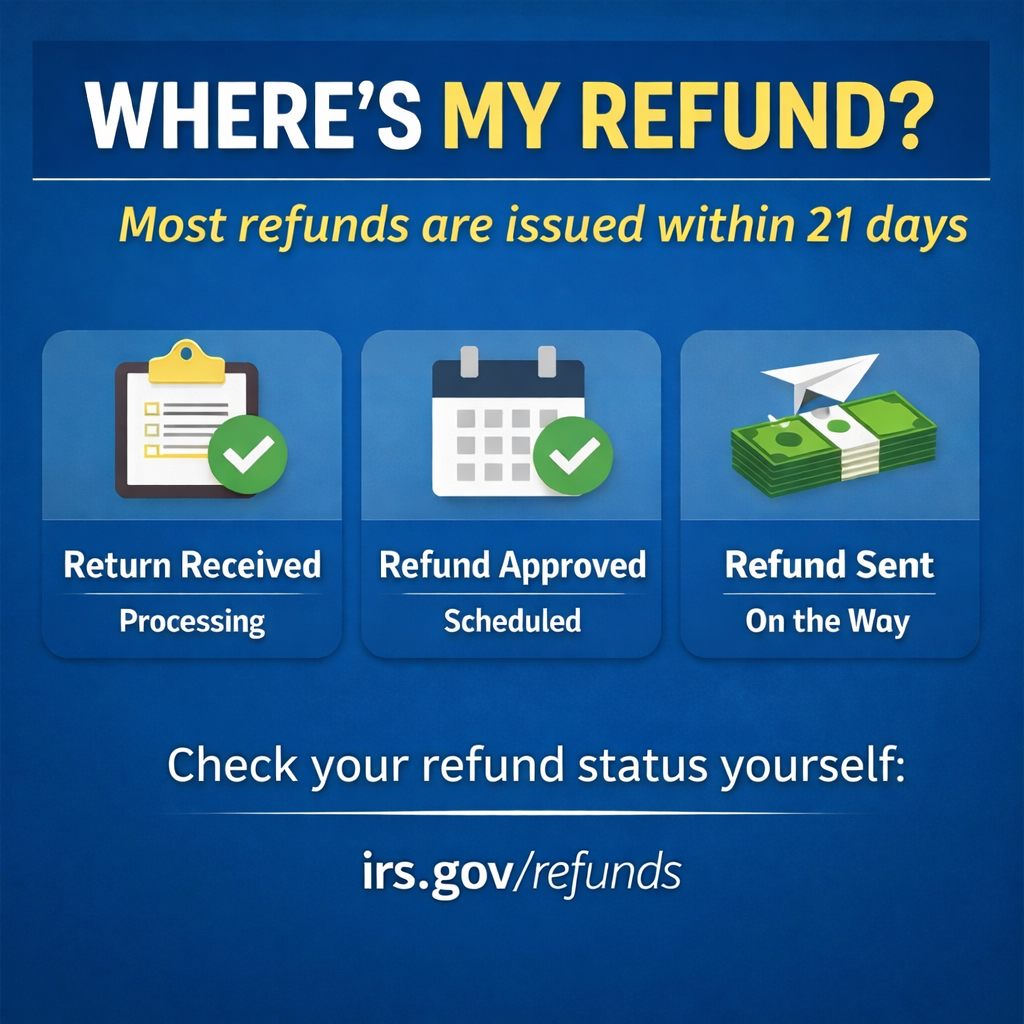
You’ll see one of three statuses:
• Return Received — The IRS has your return and is processing it.
• Refund Approved — Your refund has been approved and is scheduled.
• Refund Sent — The IRS has issued the refund.
If you selected direct deposit, funds typically arrive within a few business days after “Refund Sent.”
What About Paper Checks?
If you did not choose direct deposit, the IRS will mail a paper check to the address on your return. However, paper checks take significantly longer to arrive than direct deposit.
Delivery time depends on mail processing and can take several weeks after the refund is marked as “Sent.”
How Long Does It Usually Take?
For electronically filed returns:
• Most refunds are issued within 21 days.
• Direct deposit is significantly faster than paper checks.
Paper-filed tax returns take longer to process and can delay the refund timeline substantially.
Why Refunds Get Delayed
.Not every delay means something is wrong. Common causes include:
• Errors or missing information
• Identity verification reviews
• Earned Income Credit (EIC) or Additional Child Tax Credit (ACTC) claims
• Income document mismatches
• Bank account errors
If the IRS needs additional information, they will send a letter explaining what is required.
When Should You Be Concerned?
• If it has been less than 21 days since e-filing — wait.
• If the tracker says “still processing” — wait.
• If you receive an IRS letter — respond promptly.
• If the refund amount changes — review carefully.
Calling the IRS before the 21-day mark typically will not accelerate the process.
Why Refunds Feel Smaller (or Larger) This Year
Refund amounts vary year to year because of:
• Income changes
• Withholding adjustments
• Credit eligibility
• Marketplace Premium Tax Credit reconciliation
• Child-related credits
A refund is not a bonus — it is your own money being returned.
The Bottom Line
Checking your refund status is normal. In most cases, patience — not panic — is the correct response.
If your refund is significantly delayed, reduced unexpectedly, or you receive IRS correspondence you do not understand, it is wise to review it carefully.
This article is for informational purposes only and does not constitute tax advice.
Every situation is different. Please contact us directly to discuss your specific facts and circumstances.