U.S. Tax Filing When You’re Affected by Armed Conflict
What Americans Overseas Need to Know
The United States taxes its citizens on their worldwide income, regardless of where they live.
Even during times of political instability or armed conflict, most Americans overseas must still file a U.S. tax return. However, the IRS does recognize that conflicts and emergencies can disrupt normal life, and there are special rules and relief provisions that may apply.
Americans Overseas Still Have Filing Requirements
If you are a U.S. citizen or resident alien living abroad, you generally must file a federal income tax return if your income exceeds the normal filing thresholds.
This applies even if:
• You live in a country experiencing armed conflict
• Your income is earned entirely outside the United States
• You plan to exclude income using the Foreign Earned Income Exclusion (FEIE) or claim a Foreign Tax Credit
In most cases, the IRS still requires a return to be filed in order to claim those benefits.
Automatic Filing Extensions for Americans Abroad
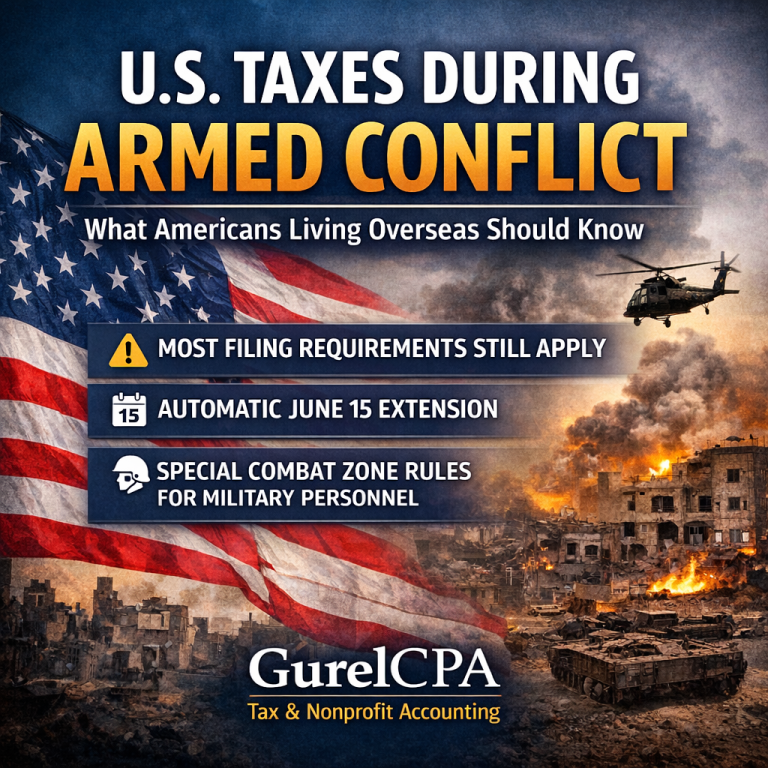
Americans living outside the United States automatically receive a two‑month extension to file their tax return.
Instead of the usual April 15 deadline, taxpayers abroad typically have until June 15 to file. Interest still accrues on unpaid tax after April 15, but the filing deadline itself is extended.
Additional extensions can be requested if needed.
Questions? Let’s Talk.
If you have questions about U.S. tax filing requirements while living abroad or during periods of political instability or armed conflict, please contact us for a free consultation to discuss your specific situation.
This article is for informational purposes only and should not be considered tax advice. Every taxpayer’s situation is unique, especially for Americans living overseas.
Special IRS Relief for Conflict Zones
When armed conflicts significantly disrupt a region, the IRS sometimes announces special tax relief for affected taxpayers.
This relief may include:
• Extended filing deadlines
• Extended payment deadlines
• Waiver of certain penalties
• Additional time for compliance with reporting requirements
Each situation is different, and relief is usually announced on a case‑by‑case basis.
Combat Zone Rules for Military Personnel
Separate rules apply to members of the U.S. Armed Forces serving in designated combat zones.
Military personnel may receive:
• Extended tax filing deadlines
• Exclusion of certain combat pay from taxable income
• Suspension of certain IRS deadlines during deployment
These provisions are designed specifically for active military service members and typically do not apply to civilians living in the same region.
If Conflict Has Disrupted Your Records
In many conflict situations, taxpayers may lose access to financial records, bank statements, or employment documents.
If this happens, the IRS generally allows taxpayers to:
• Reconstruct income records
• Request copies from financial institutions
• File amended returns later if necessary
The most important step is to stay compliant with filing requirements whenever possible.