The IRS Will NOT Contact You This Way
One of the easiest ways to identify a tax scam is knowing how the IRS actually communicates with taxpayers.
The IRS generally initiates contact by mail through the U.S. Postal Service. The agency does not begin communication through:
• Email
• Text messages
• Social media messages
• Threatening phone calls demanding immediate payment
If someone contacts you claiming to be from the IRS and demands payment or sensitive information, it is almost certainly a scam.
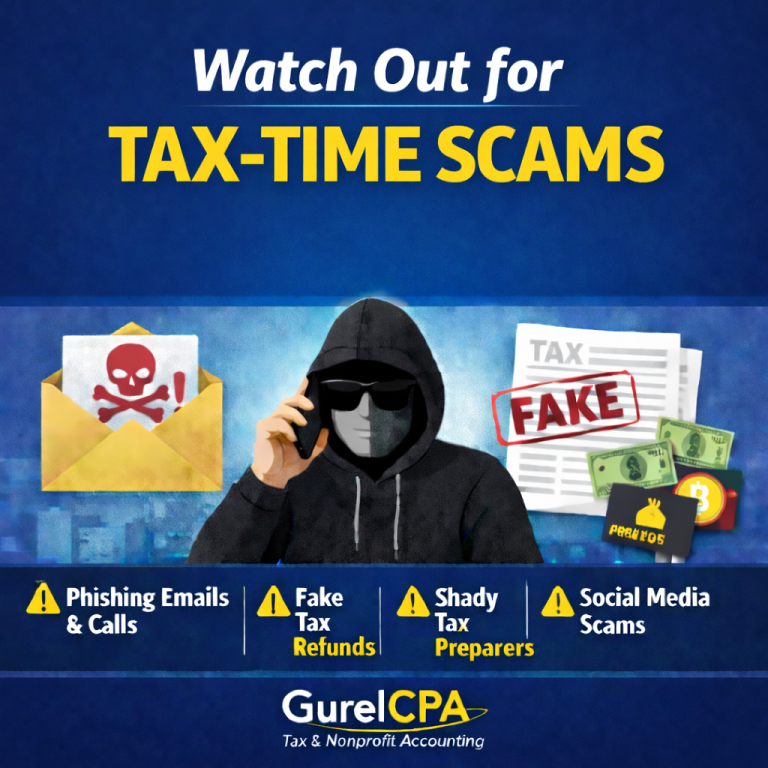
Social Media Tax Advice Schemes
In recent years, misleading tax advice has spread rapidly through social media platforms. Some posts encourage taxpayers to claim credits or deductions they are not eligible for, often promising large refunds.
Following such advice can lead to audits, penalties, and repayment of refunds.
How to Protect Yourself
To avoid becoming a victim of tax scams:
• Do not click links in unsolicited tax-related emails or texts
• Never share personal tax information with unknown callers
• Verify the identity of anyone claiming to represent the IRS
• Work with a trusted tax professional
• Report suspected scams to the IRS
If you receive suspicious messages claiming to be from the IRS, you can forward phishing emails to phishing@irs.gov.
Questions about tax filing, IRS notices, or suspicious tax-related communications? If you're unsure whether something is legitimate, it's always better to ask before responding. The article is meant for informational purposes only. Please contact me directly to discuss how this applies to your individual tax situation.
Watch Out for Tax-Time Scams
As tax season gets underway, millions of taxpayers are gathering documents and preparing to file their returns. Unfortunately, this is also the time when scammers become most active, targeting taxpayers with emails, phone calls, and text messages designed to steal personal and financial information.
Each year the IRS publishes alerts about common scams through its “Dirty Dozen” tax scam campaign, reminding taxpayers to stay vigilant during filing season. Understanding the most common tax scams can help you avoid becoming a victim.
Common Tax Scams to Watch For
During tax season, scammers often use similar tactics to trick taxpayers into providing Social Security numbers, bank information, or payments.
Phishing Emails and Text Messages
Scammers send emails or text messages that appear to come from the IRS or tax software companies. These messages may claim:
• There is a problem with your tax return
• You are owed a refund
• Your account has been locked or suspended
These messages typically contain links to fake websites designed to steal login credentials or personal information.
Fake IRS Phone Calls
Some scammers call taxpayers pretending to be IRS agents. They may threaten arrest, lawsuits, or license suspension unless payment is made immediately.
The IRS does not demand immediate payment over the phone and will never ask for payment through gift cards, prepaid debit cards, or cryptocurrency.
Fraudulent Tax Preparers
Another risk during filing season involves unscrupulous tax preparers who promise unusually large refunds or ask taxpayers to sign blank tax returns.
Warning signs include:
• Charging fees based on the size of the refund
• Refusing to sign the tax return as the preparer
• Directing refunds into accounts they control
Taxpayers should always review their return carefully and work with a qualified, ethical tax professional.