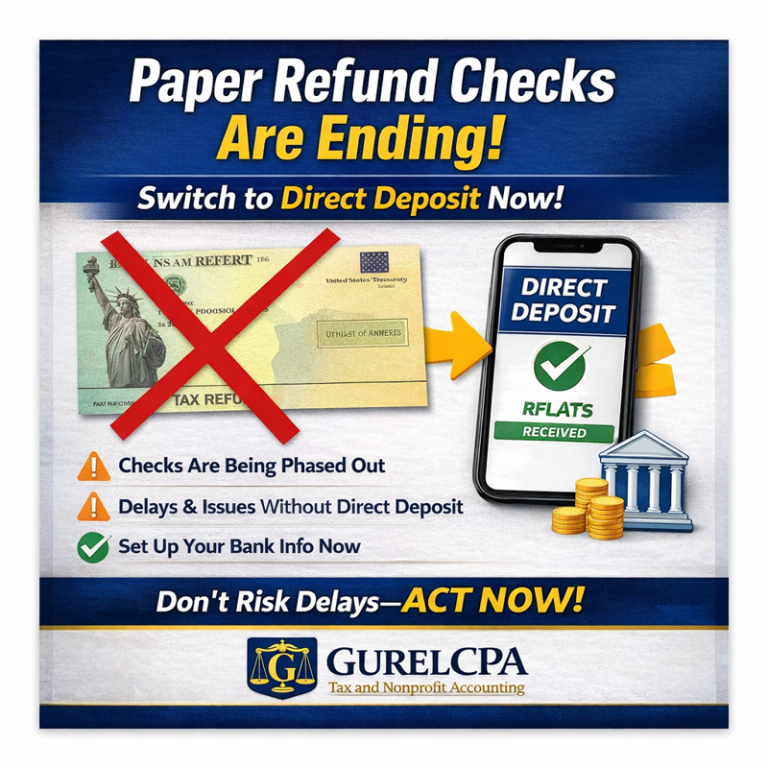
What You Need to Do (Now)
If you’ve been relying on paper checks, this is your next step:
• Set up direct deposit (routing number, account number, account type)
• Provide accurate information when filing
• Double-check everything before submitting your return
No Bank Account?
You still need an electronic option. Consider a basic checking account or a prepaid debit card that accepts direct deposit.
The Bottom Line
Paper refund checks are no longer something you can rely on.
If you want your refund faster, more securely, and without delays—you must use direct deposit.
Questions? Let’s Talk
If you’re unsure how to set up direct deposit, I can help.
Please contact me directly to discuss your specific tax situation. I offer a free consultation.
IRS Has Ended Most Paper Refund Checks, Your Action is Required
If you’ve been receiving your tax refund by paper check, this is important:
The Internal Revenue Service has effectively moved away from issuing paper refund checks in most situations.
Today, direct deposit is the standard—and in most cases, expected—method for receiving your refund.
If you have not already made this change, you need to take action now to avoid delays or complications.
What This Means for You
If you file your tax return without direct deposit information, you may run into real problems:
1. Your Refund May Be Delayed
Electronic refunds are processed quickly. Returns without direct deposit can face additional handling—and slower processing.
2. Paper Checks Are Now Limited
Paper checks are no longer the default option. They are generally issued only in limited exception situations, not by choice.
3. Higher Risk of Issues
If a check is issued, it can be lost, stolen, sent to an outdated address, and take weeks—or longer—to resolve.
The article is meant for informational purposes only. Please contact me directly to discuss how this applies to your individual tax situation.