The Part That Surprises Most Gig Workers: Self-Employment Tax
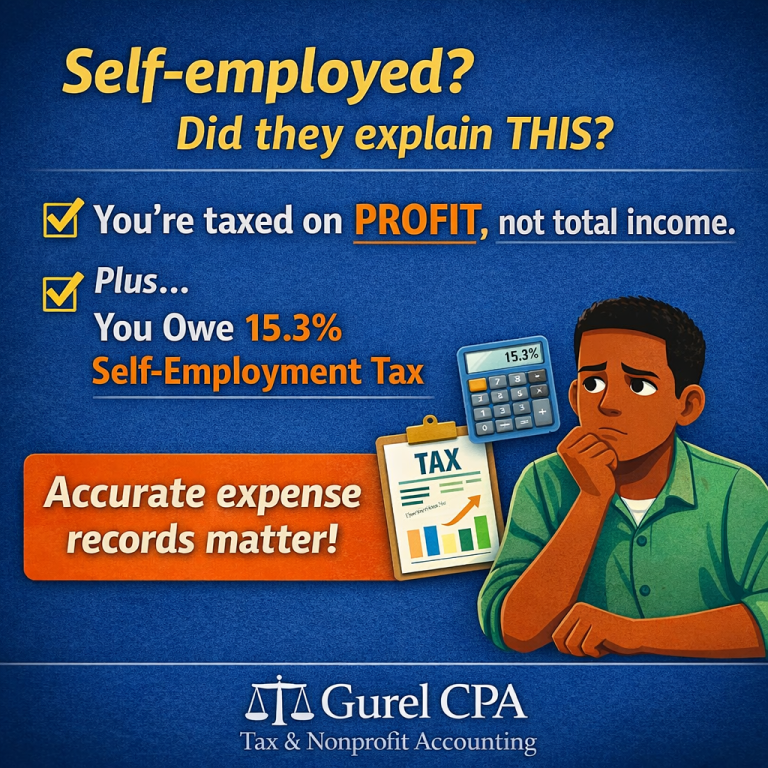
In addition to income tax, you also pay self-employment tax. This covers Social Security and Medicare. The rate is 15.3% on your net business income.
This is separate from your regular income tax. When you work for an employer, they pay half of these taxes for you. When you’re self-employed, you pay both halves.
How Profit Is Calculated
Here’s a simple example:
- You earn: $50,000
- You have expenses: $20,000
- Your net income: $30,000
You are taxed on $30,000, not $50,000.
Where That Profit Shows Up
Your net income from Schedule C flows directly into your Form 1040. It becomes part of your total taxable income, just like wages from a job.
Why Expenses Matter
Your business expenses directly reduce the amount of income you are taxed on. So, the more accurately you track and report your expenses, the lower your taxable income may be.
We’ll go into detail on what counts as a business expense in a follow-up article—but for now, just know: expenses reduce your profit, and your profit is what gets taxed.
Gig Workers: You’re Taxed on Net Profit, Not Gross Income
If you’re new to self-employment—whether driving, freelancing, consulting, or selling online—your taxes work very differently from a traditional job.
One of the most important things to understand is you are not taxed on your total income. You are taxed on your profit.
Schedule C: Where Your Business Income Is Reported
Most gig workers report their business activity on Schedule C, which is filed with your individual tax return (Form 1040).
On Schedule C, you report your total income (what you were paid) and your business expenses. The difference between those two is your net income, also called your profit.
The Bottom Line
You’re taxed on what you keep—not what you earn.
But you are responsible for Income tax and Self-employment tax (15.3%). And both are based on your net income.
Questions? Let’s Talk
Starting out as a gig worker can feel overwhelming, but getting the basics right makes a big difference.
Please contact me directly to discuss how this applies to your individual tax situation. I offer a free consultation to help you get started the right way.
The article is meant for informational purposes only. Please contact me directly to discuss how this applies to your individual tax situation.