From Compliance to Optimization: Turning a Required Filing into a Strategic Asset
Compliance Is the Minimum Standard
Form 990-N is intentionally simple. It confirms that an organization remains eligible for tax-exempt status. Beyond that, it provides almost no information to the public.
There is no mission statement, no description of programs, no financial context, and no explanation of how donations are used.
For prospective donors, grantors, partners, and even potential board members, the 990-N provides little insight into the organization behind the filing.
Moving From Compliance to Optimization
Nonprofit leaders will benefit from thinking beyond minimum requirements and asking how required processes can be used more intentionally. This is the shift from compliance to optimization: a proactive approach to transparency.
Even small nonprofits have the option to file Form 990-EZ voluntarily, rather than filing the minimal 990-N postcard. By doing so, the organization can place meaningful, standardized information into the public record, including:
- The organization’s mission and purpose
- Summary financial information
- How funds are used to support programs
- Governance and operational structure
- Ongoing compliance with 501(c)(3) requirements
Instead of simply checking a compliance box for the IRS, the organization creates a transparent snapshot of who they are and how they operate — in a format donors and grantmakers already recognize and trust.
Your Three Most Important Stories
One of the most important sections of Form 990 is Part III: Program Service Accomplishments.
The form requires organizations to list their three largest programs, based on dollars spent during the year, and provide narrative descriptions explaining:
- The nature of the program or services provided
- Who is served
- The scope or scale of the activity
- How the program advances the organization’s mission
This section provides meaningful space for explanation. While organizations do not choose which programs appear based purely on preference, they do have discretion in how programs are described and how related activities are grouped, when appropriate.
A Place to Let Your Organization’s Light Shine
The program accomplishments section of Form 990 is not marketing copy, but it is one of the clearest places a nonprofit can explain its work in its own words.
Because the return is filed with the IRS under penalty of perjury, these descriptions carry a level of credibility that traditional marketing materials do not.
For donors and grantmakers reviewing information on platforms like GuideStar or Charity Navigator, this section often becomes the most trusted explanation of what an organization actually does.
Strong program descriptions demonstrate that the organization:
- Understands its mission and programs
- Can clearly articulate how resources are used
- Tracks program activity and spending
- Takes transparency and governance seriously
For many small nonprofits, this may become the most complete and authoritative public description of their work available anywhere.
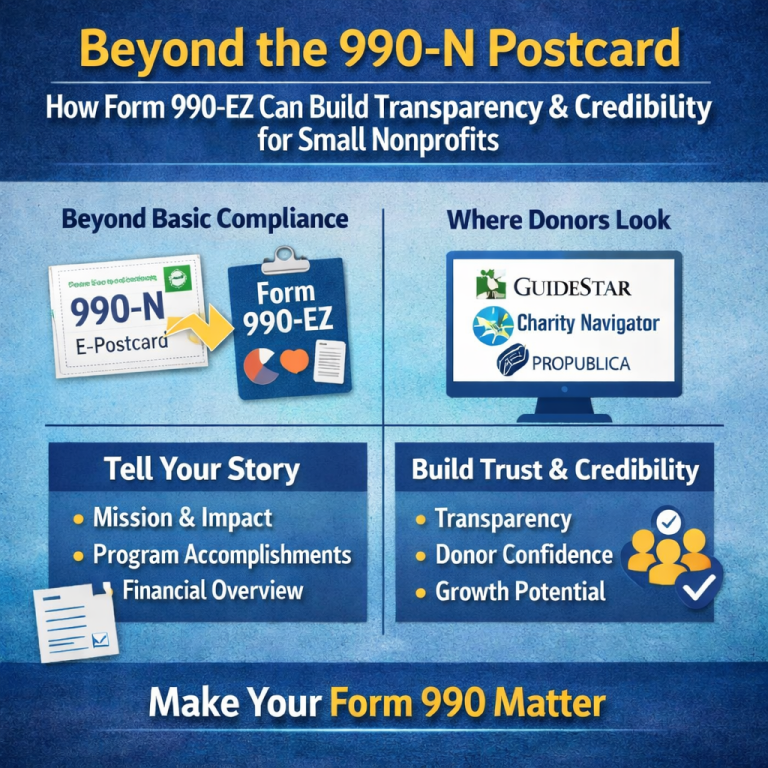
Beyond the 990-N Postcard: How Form 990 Can Help Small Nonprofits Build Transparency and Credibility
This article is written for people who care about small nonprofit organizations: executive directors, board members, volunteers, donors, and other stakeholders who want to see nonprofits thrive, not merely survive.
Many small nonprofits operate with limited resources and annual gross receipts under $50,000. Under IRS rules, those organizations may satisfy their federal filing requirement by submitting Form 990-N, commonly known as the IRS e-Postcard.
From a compliance standpoint, that filing is enough.
From a strategic standpoint, it may be a missed opportunity.
Where Donors and Grantmakers Actually Look
Many donors, grantmakers, and nonprofit evaluators begin their research on public nonprofit information platforms such as GuideStar (Candid), Charity Navigator, and ProPublica’s Nonprofit Explorer
These platforms pull their information directly from IRS Form 990 filings.
When an organization files only Form 990-N, there is very little information for these platforms to display. When an organization files Form 990-EZ or the full Form 990, however, those platforms display mission statements, program descriptions, and summary financial information sourced directly from the return.
For many stakeholders, this may be the first place they encounter a nonprofit.
Why This Matters for Small Nonprofits
Large nonprofit organizations typically have development staff, communications teams, and marketing budgets.
Smaller nonprofits often do not.
For organizations with annual revenue under $50,000, Form 990-EZ may be one of the only places where a complete, standardized description of their programs appears publicly.
When approached thoughtfully, this transforms a required filing into an opportunity for clarity, credibility, and trust-building.
Let’s Talk Before You File
If you’re involved with a nonprofit and would like to explore whether moving from compliance to optimization makes sense for your organization, I invite you to reach out.
If you would like to discuss whether voluntary Form 990-EZ filing could strengthen your organization’s transparency and credibility, I offer a free consultation to review your organization’s situation and help you think through the strategic use of Form 990-EZ.
This article is provided for general informational purposes and should not be considered tax or legal advice. Every nonprofit’s situation is different.